
What's Happening?
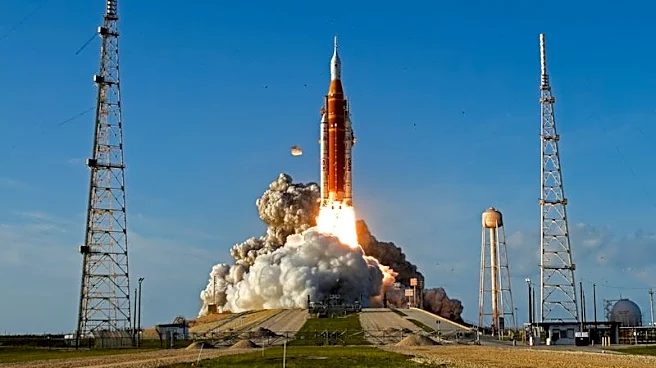
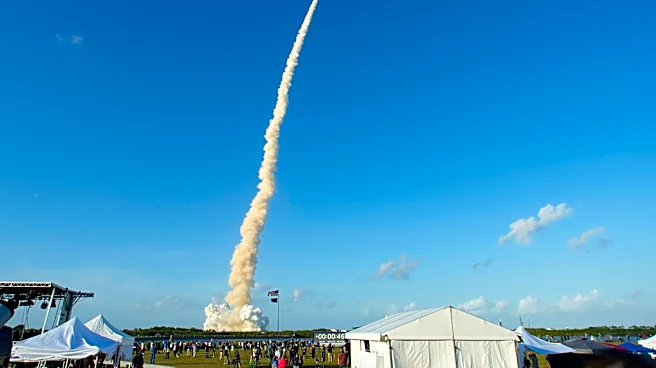
NASA's Artemis II mission, launched last week, is set to break the distance record from Earth previously held by Apollo 13. The mission involves a crew of three Americans and one Canadian who are on a trajectory to swing around the moon without landing.
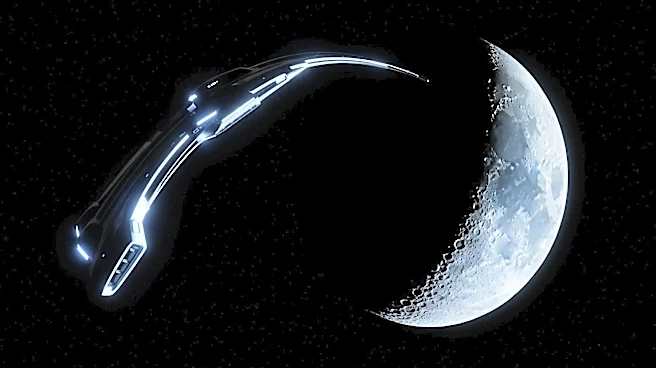
This mission marks humanity's first trip to the moon since 1972. The Artemis II crew will surpass Apollo 13's maximum distance of 248,655 miles from Earth by approximately 4,000 miles. The mission includes a six-hour lunar flyby, offering views of the moon's far side and a total solar eclipse visible only from the Orion capsule. The crew will document their observations with professional cameras and iPhones, capturing images of the moon's surface and the solar corona during the eclipse.
Why It's Important?
The Artemis II mission is a significant step in NASA's renewed efforts to explore the moon and establish a sustainable human presence there. By surpassing Apollo 13's distance record, Artemis II not only honors past achievements but also sets the stage for future lunar exploration, including plans for a moon base equipped with landers, rovers, and habitats. This mission demonstrates technological advancements and international collaboration in space exploration, as it includes a Canadian astronaut. The success of Artemis II could pave the way for more ambitious missions, potentially leading to human exploration of Mars and beyond. The mission also provides valuable scientific data and public engagement opportunities, inspiring a new generation of space enthusiasts.
What's Next?
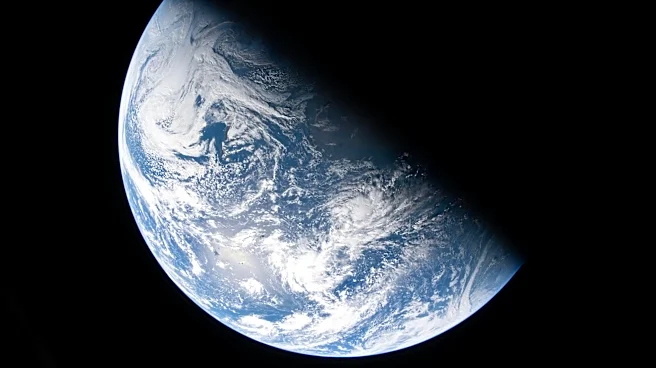
Following the moon flyby, Artemis II will return to Earth, with a planned splashdown in the Pacific Ocean near San Diego on April 10. The mission's success will be evaluated to inform future Artemis missions, including Artemis III, which aims to land astronauts on the lunar surface. NASA plans to use the data and experiences from Artemis II to refine technologies and strategies for long-term lunar exploration. The mission also includes a unique opportunity for the Artemis II crew to communicate with the International Space Station, fostering collaboration and sharing insights between astronauts in different space environments.