
What's Happening?
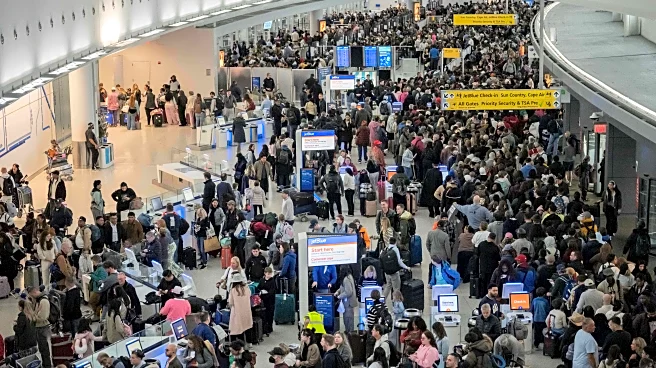
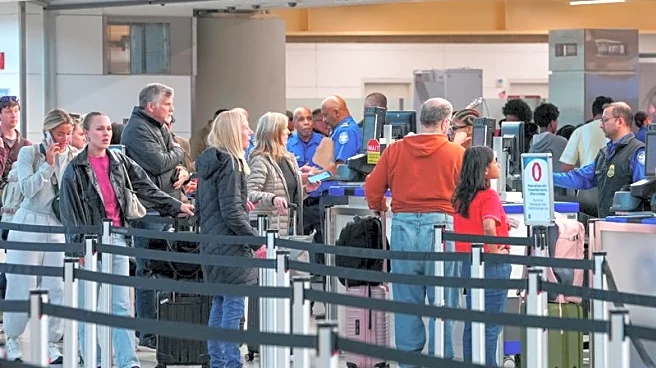
Airports across the United States are experiencing significant delays due to a partial government shutdown affecting the Transportation Security Administration (TSA). The shutdown has led to unpaid TSA officers calling out in large numbers, exacerbating
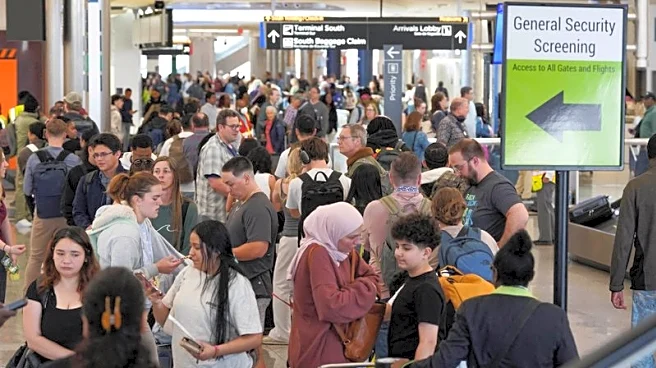
staffing shortages during a peak travel period. President Trump has announced plans to deploy U.S. Immigration and Customs Enforcement (ICE) agents to assist at airports, a move criticized by some lawmakers as a misuse of resources. The situation has resulted in long wait times at major airports, with reports of lines stretching into parking garages and wait times exceeding two hours at some locations. The Department of Homeland Security (DHS) has warned that the situation could worsen if the funding stalemate continues.
Why It's Important?
The TSA staffing crisis highlights the broader implications of the government shutdown on national infrastructure and public services. The delays are not only causing inconvenience for travelers but also raising concerns about airport security and operational efficiency. The deployment of ICE agents, typically focused on immigration enforcement, to assist with TSA duties underscores the severity of the staffing shortages. This situation could impact the airline industry, potentially leading to financial losses due to flight delays and cancellations. Additionally, the political ramifications are significant, as the shutdown reflects ongoing partisan conflicts over federal funding and immigration policies.
What's Next?
If the government shutdown persists, travelers may face even longer delays, and some airports could potentially close security checkpoints. The involvement of ICE agents may provide temporary relief, but it is not a sustainable solution for TSA's operational needs. Political leaders will likely continue negotiations to resolve the funding impasse, but the timeline for a resolution remains uncertain. The situation may prompt discussions on the need for contingency plans to prevent similar disruptions in the future.