





What's Happening?
The National Parks Conservation Association (NPCA), through its Yellowstone connectivity program manager Pat Todd, is actively working to remove and modify barbed-wire fencing in the Greater Yellowstone Ecosystem. This initiative aims to reconnect crucial
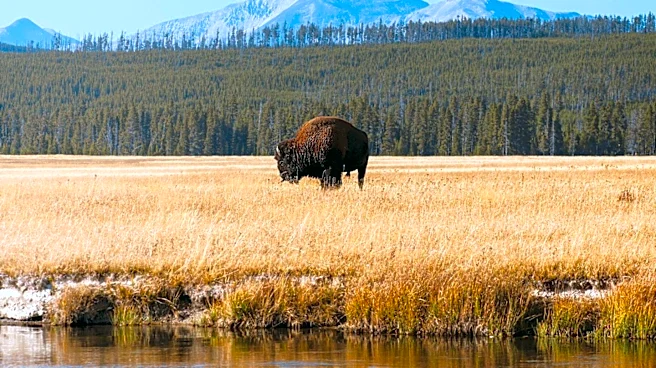
wildlife corridors, as the more than 16,000 miles of barbed-wire fencing in the region pose a significant barrier to animal movement. Since 2010, the NPCA has mobilized approximately 1,700 volunteers to help modify or remove 93 miles of fencing for over 40 landowners, including projects on both federal and state public land. The Madison Valley is a key focus area due to its importance as a habitat for elk, pronghorn, mule deer, grizzly bears, and wolves. The project prioritizes areas where fence removal or modification can have the greatest impact on wildlife migration, using state wildlife data and anecdotal accounts from landowners.
Why It's Important?
The efforts to reconnect wildlife corridors in the Greater Yellowstone Ecosystem are vital for maintaining biodiversity and ecological health in one of the U.S.'s most iconic natural landscapes. Barbed-wire fencing fragments habitats, leading to stress, injury, and even death for animals like pronghorn, which are not anatomically designed to jump fences. Elk, while able to jump, often damage infrastructure in the process. By creating wildlife-friendly fencing, these initiatives reduce animal mortality, improve access to essential resources like winter forage, and help restore historical migration routes. This has a direct impact on the health and resilience of wildlife populations, as evidenced by the doubling of a pronghorn herd in Yellowstone's Lamar Valley after fence modifications. The project also highlights the importance of collaboration between conservation organizations, landowners, and government agencies in addressing complex environmental challenges.
What's Next?
The NPCA plans to continue its work in the Greater Yellowstone Ecosystem, with projects like the Durham Ranch aiming to replace roughly six to eight miles of fence over the next four years. Funding from sources such as the Natural Resources Conservation Service (NRCS) through the 'Targeted Implementation Plan' is available until 2030 for wildlife-friendly and virtual fencing solutions. Beyond fencing, Todd emphasizes the need for concurrent efforts to restore riparian habitats and address invasive species to ensure connected populations. Additionally, initiatives like Madison Safe Passages are being organized to install wildlife-crossing structures, further mitigating barriers to movement. The success of these projects relies on continued volunteer engagement, landowner cooperation, and sustained funding, with the ultimate goal of restoring genetic memory in species and enabling them to adapt to changing conditions, including those brought about by climate change.
Beyond the Headlines
The issue of wildlife connectivity in the Greater Yellowstone Ecosystem extends beyond immediate ecological benefits, touching upon broader themes of land stewardship, human-wildlife coexistence, and the economic implications of conservation. The collaboration between diverse stakeholders, including ranchers, volunteers, and federal agencies, demonstrates a shift towards more integrated approaches to land management. Ranchers like Todd Durham, who initially faced challenges with fence maintenance, are finding win-win solutions through wildlife-friendly fencing that benefits both their livestock and local wildlife. This collaborative model could serve as a blueprint for other regions facing similar challenges, fostering a sense of shared responsibility for natural resources. The long-term success of these efforts will depend on sustained community engagement and policy support that recognizes the intrinsic value of connected landscapes and the economic benefits derived from healthy ecosystems.