





What's Happening?
Alaska is home to numerous tidewater glaciers, which are glaciers that flow from land directly into the ocean, where pieces of ice break off to form icebergs. Two prominent examples are Hubbard Glacier and Dawes Glacier. Hubbard Glacier, located in Disenchantment
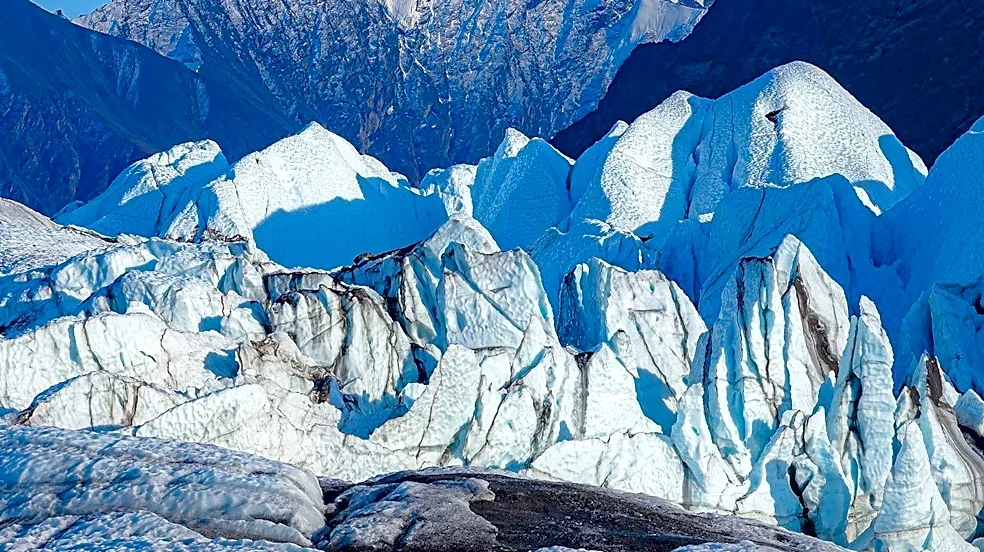
Bay, is notable for its broad ice face, showcasing features like blue crevasses, uneven ice towers, and dark bands of sediment. Dawes Glacier is situated at the head of Endicott Arm in Southeast Alaska, accessible through a fjord characterized by steep slopes, waterfalls, and floating ice. These glaciers are formed from accumulated snow on land that compresses into dense ice and moves downhill due to gravity until it reaches the sea. The process of ice breaking away from the glacier's end is known as calving, which can range from small fragments to large sections falling into the water with significant sound and splash. The distinctive blue color of glacier ice is due to its absorption of red wavelengths of sunlight, allowing blue light to scatter back.
Why It's Important?
The presence of tidewater glaciers in Alaska is significant for several reasons, particularly for tourism and scientific understanding of glacial dynamics. These natural phenomena attract a substantial number of visitors, contributing to the state's economy through cruise excursions and guided tours. The unique geological formations, such as fjords carved by glaciers, offer insights into the powerful erosive forces of ice over millennia. Understanding how these glaciers form, move, and calve provides valuable data for glaciologists studying climate change and its impact on ice masses. The interaction between freshwater glaciers and saltwater environments also creates unique ecosystems, influencing marine life and coastal habitats. The visual spectacle of calving events and the striking blue ice are major draws, making these glaciers iconic natural landmarks that highlight the raw beauty and dynamic geological processes of the Alaskan landscape.
What's Next?
For visitors, the experience of viewing Alaska's tidewater glaciers will continue to be a major draw, with cruise lines and tour operators offering various excursions. These include boat trips that allow close-up observation of glacier features and calving events, as well as opportunities to explore the surrounding fjords and wildlife. The availability of these experiences will remain subject to weather and ice conditions, which can influence vessel approaches and safety protocols. From a scientific perspective, ongoing monitoring of these glaciers is crucial to track changes in their size, movement, and calving rates, providing critical data for climate research. The continued study of tidewater glaciers will help inform predictions about sea-level rise and the broader effects of global warming on polar and subpolar regions. Conservation efforts will also likely focus on preserving the pristine environments surrounding these glaciers, balancing tourism with ecological protection.
Beyond the Headlines
Beyond their immediate appeal as tourist attractions, Alaska's tidewater glaciers represent a profound connection between geological history and ongoing environmental change. The fjords, carved by ancient glaciers, serve as natural laboratories for studying geomorphological processes and the long-term impacts of ice ages. The distinct blue color of the ice, a result of light absorption and scattering, offers a tangible illustration of physical optics in a natural setting. The dynamic nature of calving events, while visually spectacular, also underscores the continuous transformation of the Earth's surface. These glaciers are not static entities but active components of a larger, interconnected climate system. Their retreat or advance can signal broader environmental shifts, making them key indicators of planetary health. The cultural significance of these landscapes to indigenous communities, though not detailed in the source, often involves deep historical and spiritual connections to the land and its natural cycles.