





What's Happening?
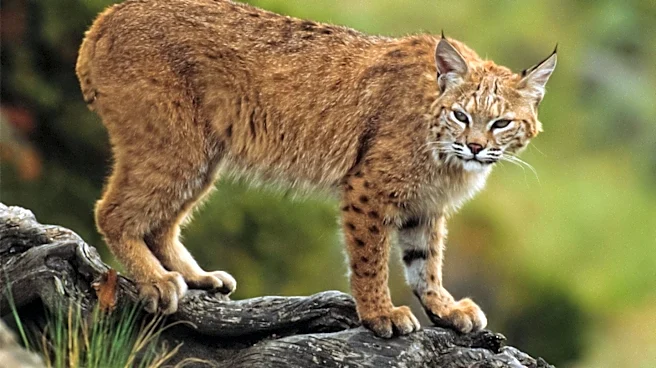
A bobcat was recently spotted in a West Des Moines neighborhood, with a KCCI viewer, David Charlson, capturing video of the animal in his backyard in the Jordan Grove area. The footage shows the bobcat playing with what appeared to be its catch of the day,
likely a squirrel. Andy Kellner, an urban wildlife biologist at the Iowa Department of Natural Resources (DNR), confirmed the sighting. Kellner noted that while bobcats are typically elusive, sightings of various woodland wildlife, including deer, coyotes, and turkeys, are common in areas near Jordan Creek. He described bobcats as a 'conservation success story' that are still recovering in parts of the state. Kellner advised residents to enjoy viewing these animals but also provided tips for deterring them if they are unwanted in a specific area, such as making loud noises or waving arms, as bobcats tend to keep to themselves and are easily scared off.
Why It's Important?
The sighting of a bobcat in a suburban area like West Des Moines is significant as it indicates the increasing presence of wildlife in urban and suburban environments. This can be attributed to successful conservation efforts, which have led to the recovery of bobcat populations, as well as habitat encroachment by human development. For residents, such sightings can be both fascinating and a cause for concern regarding pet safety and potential human-wildlife interactions. It highlights the need for public awareness about coexisting with wildlife and understanding their behavior. The DNR's confirmation and advice are crucial for educating the public on how to react to these encounters, promoting both human safety and wildlife conservation. This event underscores the dynamic relationship between urban expansion and natural ecosystems.
What's Next?
Residents in West Des Moines, particularly those near natural corridors like Jordan Creek, may experience more frequent wildlife sightings, including bobcats. The DNR will likely continue to monitor wildlife populations and provide guidance to the public on how to safely coexist with these animals. Educational efforts may increase to inform residents about bobcat behavior, how to secure pets, and methods for deterring wildlife from residential properties. Local authorities might also consider community outreach programs to address any concerns and promote responsible wildlife interaction. The ongoing presence of bobcats and other wildlife in suburban areas will necessitate continued adaptation and awareness from both residents and wildlife management agencies.
Beyond the Headlines
The bobcat sighting in West Des Moines points to a broader ecological trend: the increasing adaptation of wildlife to human-dominated landscapes. As urban areas expand, wildlife habitats shrink, forcing animals to live in closer proximity to humans. This phenomenon presents both challenges and opportunities. On one hand, it raises questions about urban planning, wildlife corridors, and the potential for human-wildlife conflict. On the other hand, it offers unique opportunities for urban residents to connect with nature and observe wildlife, fostering a greater appreciation for biodiversity. The bobcat's recovery is a testament to successful conservation, but its presence in suburban settings also highlights the ongoing need for thoughtful land use planning and public education to ensure harmonious coexistence between humans and the natural world. This interaction also underscores the resilience and adaptability of wildlife in the face of environmental changes.