








What's Happening?
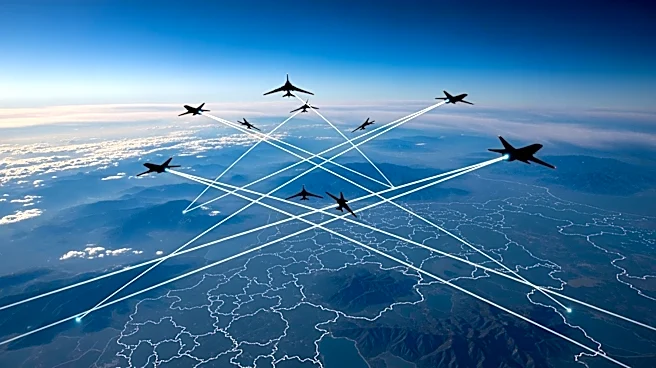
The Azeraeronavigation Air Traffic Department (AZANS) has experienced a significant increase in overflight volumes, quadrupling over the past five years. This surge is attributed to airlines seeking alternative routes due to airspace closures resulting
from Russia's invasion of Ukraine and ongoing conflicts in the Middle East. Azerbaijan, strategically located between Russia and Iran, has become a crucial air corridor for flights between Europe and Asia. According to AZANS Director Farhan Guliyev, the department handled an average of 278 flights daily in early 2022, which rose to 695 by the end of 2025. The recent Middle East crisis further increased this number to 810 daily flights in March 2026, with a peak of 1,062 flights on a single day in May. AZANS has implemented contingency plans, redesigned airspace, and invested in air traffic management systems to accommodate the increased traffic.
Why It's Important?
The increase in overflights through Azerbaijan's airspace highlights the geopolitical impact of regional conflicts on global aviation routes. As airlines avoid Russian and Ukrainian airspace due to safety concerns and sanctions, Azerbaijan's airspace has become a vital alternative, ensuring continued connectivity between Europe and Asia. This shift not only boosts Azerbaijan's revenue from overflight fees but also underscores the country's strategic importance in global aviation. The situation reflects broader challenges in international air travel, where geopolitical tensions can significantly alter flight patterns and economic dynamics.
What's Next?
AZANS plans to further enhance its capacity to manage the growing volume of flights by collaborating with neighboring states on air traffic flow management. This initiative could increase hourly movements from 250 to 300, providing more flexibility and efficiency in handling the increased traffic. The ongoing geopolitical tensions suggest that Azerbaijan's role as a key air corridor will continue to be significant, potentially leading to further investments in infrastructure and technology to support this critical function.