




What's Happening?
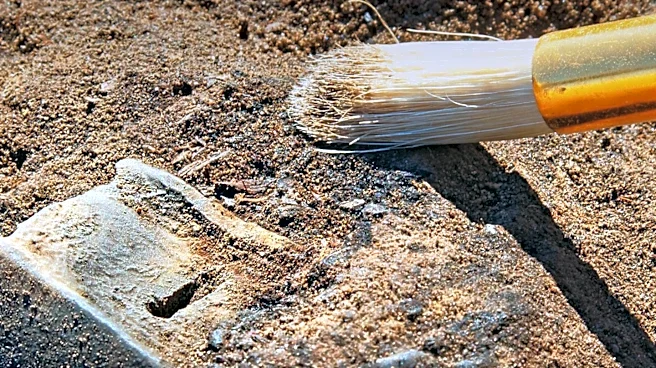
The Pompeii Archaeological Park announced the discovery of an ancient cupboard, or 'armarium,' in house IX 11, 7, traditionally attributed to Cornelius Maximus. The wooden cupboard, which had rotted away, was reconstructed from imprints left in the deposits.
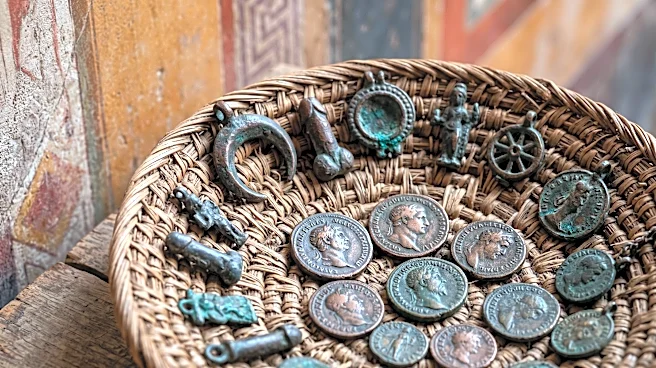
It contained various items, including body care tools like tweezers, a coticula (small palette), and a glass balsamarium (bottle for scented oils). Also found were a bronze lamp, an incense burner, lead weights, and tableware. A significant find within the cupboard was a cloth bag holding 24 miniature objects, identified as 'crepundia'—amulets given to children for protection and to make noise. Additionally, 38 bronze coins were discovered in a small basket-like container. The house itself, located on Via dell'Abbondanza, had its facade excavated in 1912, but rooms behind it were only recently investigated as part of a restoration project. The room with the cupboard featured Fourth Style wall paintings, indicating a certain standard of living, though the house showed signs of ongoing works at the time of the AD 79 eruption.
Why It's Important?
This discovery offers a rare glimpse into the daily lives and personal habits of Pompeii's inhabitants before the eruption of Vesuvius. The 'crepundia' provide insight into ancient Roman childhood practices and beliefs, particularly the use of amulets for protection and as keepsakes. The presence of coins suggests a small cash reserve, and their uncollected state indicates the suddenness of the eruption, preventing the owners from retrieving their valuables. The mix of personal care items, household objects, and potential trade-related weights (though their exact purpose is still being assessed) paints a detailed picture of a Roman household. The findings contribute to a broader understanding of Roman society, including aspects of family life, personal hygiene, and economic activities, enriching the historical narrative beyond grand public structures to the intimate details of domestic existence.
What's Next?
Further analysis will be conducted on the lead weights to determine their exact purpose, potentially shedding more light on the commercial activities of the household. Researchers will also continue to study the 'crepundia' and other artifacts to deepen their understanding of Roman customs, beliefs, and the social significance of such objects. The park's E-Journal notes that the attribution of the house to Cornelius Maximus is highly doubtful and requires further historical and legal study. The fate of the owners remains unknown, with possibilities ranging from escape without return to death during the eruption, or dying without heirs. These questions are expected to remain open, prompting ongoing research and interpretation by archaeologists and historians.
Beyond the Headlines
The find highlights the human dimension of archaeological discoveries, transforming ancient ruins into relatable narratives of individual lives. The 'crepundia' evoke a sense of personal connection to the past, illustrating how objects can carry emotional weight and serve as mementos across generations. The uncollected coins underscore the abrupt and devastating nature of the Vesuvius eruption, a stark reminder of how quickly life can change. This discovery also prompts reflection on the challenges of historical interpretation, as archaeologists piece together fragmented evidence to reconstruct narratives, often grappling with uncertainties and multiple possibilities. The meticulous reconstruction of the cupboard from its imprints exemplifies the innovative techniques used in modern archaeology to preserve and understand ephemeral aspects of ancient life.