

What's Happening?
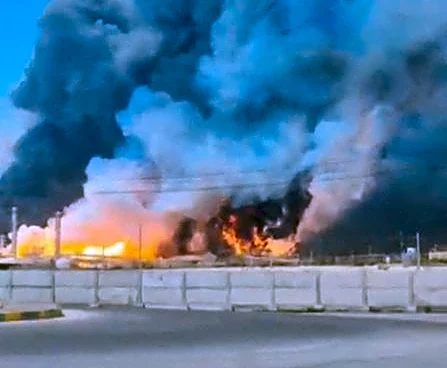
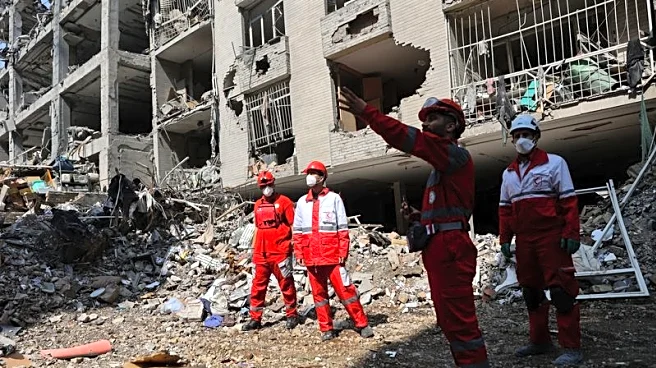
French President Emmanuel Macron has indicated that France is considering involvement in a mission in the Strait of Hormuz, contingent upon coordination with Iran. This development follows recent hostilities in the region, including Iranian strikes on oil
infrastructure in the UAE and near Oman. Macron's stance suggests that France's participation would only occur if hostilities cease, and it would require Iranian cooperation. This position reflects a complex diplomatic balancing act, as it implies potential collaboration with Iran rather than opposition. The situation in Hormuz remains tense, with oil prices rising due to the ongoing conflict. The price of WTI crude oil has increased, reflecting market concerns over the stability of oil flows in the region.
Why It's Important?
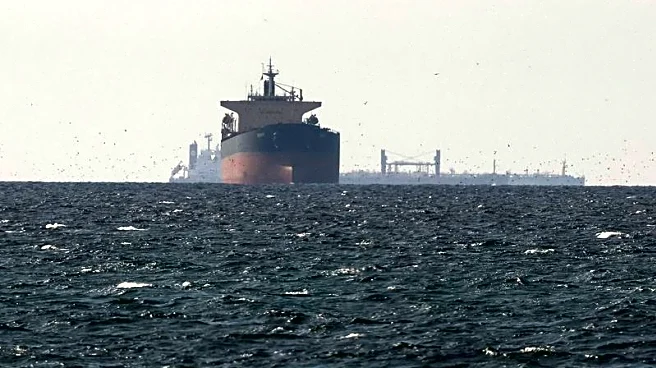
The potential involvement of France in the Hormuz mission highlights the strategic importance of the Strait of Hormuz, a critical chokepoint for global oil shipments. Any disruption in this area can significantly impact global oil prices and supply chains. France's conditional participation underscores the delicate geopolitical dynamics at play, as Western nations navigate their relationships with Iran amidst regional tensions. The situation also affects the U.S. and its allies, as they monitor developments that could influence energy markets and international relations. The rise in oil prices due to the conflict could have broader economic implications, affecting industries reliant on stable energy costs.
What's Next?
The next steps depend on the resolution of hostilities in the region and the potential for diplomatic engagement with Iran. France's involvement would require a cessation of conflict and a framework for cooperation with Iran, which could alter the geopolitical landscape. Stakeholders, including the U.S. and other Western nations, will likely continue diplomatic efforts to stabilize the region and ensure the security of oil shipments. The situation remains fluid, with potential for further developments that could impact global energy markets and international relations.