
What's Happening?
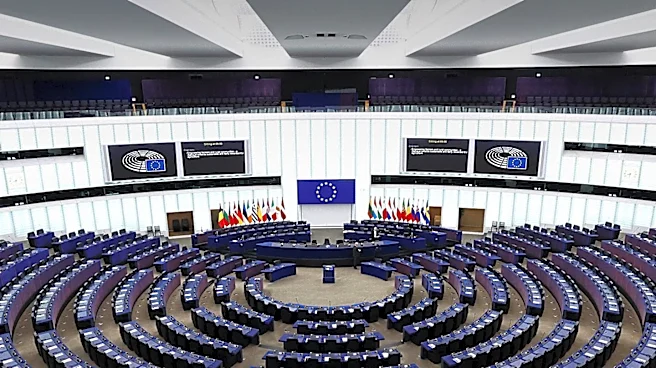
The European Parliament's Committee on Industry, Research and Energy (ITRE) has adopted key reports concerning the regulation establishing Horizon Europe, the EU's framework program for research and innovation.
These reports aim to create a more ambitious, independent, and research-driven program, incorporating many priorities from the university and broader research community. Key positive takeaways include a stronger, independent Horizon Europe with its own governance, an ambitious €200 billion budget with increased investment in excellent science, and substantial reinforcements for the European Research Council (ERC) and Marie Skłodowska-Curie Actions (MSCA). The committee also emphasized stronger safeguards for the ERC’s autonomy, preservation of MSCA’s bottom-up character, and a greater role for independent scientific and innovation expertise in Pillar II. Additionally, the reports promote more opportunities for bottom-up collaborative research within Pillar II and strengthened international cooperation through the recognition of trusted partners.
Why It's Important?
This development is significant for the future of scientific research and innovation within the European Union, potentially setting a global standard for publicly funded research programs. The proposed €200 billion budget signals a strong commitment to scientific advancement, which could lead to breakthroughs in various fields, from health to technology. Increased funding for the ERC and MSCA will support fundamental research and researcher mobility, fostering a dynamic scientific ecosystem. The emphasis on independence and researcher-driven projects ensures that scientific merit remains at the forefront, rather than political or short-term economic interests. For U.S. stakeholders, this could mean increased competition in global research and development, but also potential opportunities for collaboration, especially with the strengthened focus on international cooperation. The EU's approach to research funding and governance may also influence policy discussions in other major research-intensive nations.
What's Next?
While the ITRE committee's votes represent a significant step, negotiations will continue to refine the proposals. The European University Association (EUA) has highlighted areas for further improvement, such as ensuring societal research is not confined to predefined priorities and that new implementation arrangements do not introduce unnecessary complexity. As negotiations progress, stakeholders will be watching to see how these concerns are addressed. The goal is to reach an ambitious and timely agreement on the tenth EU framework program for research and innovation (FP10). The final shape of Horizon Europe will determine the direction and scope of EU-funded research for years to come, impacting universities, research institutions, and innovative industries across Europe and potentially influencing global research partnerships.
Beyond the Headlines
The push for a more independent and research-driven Horizon Europe reflects a broader recognition of the critical role of science in addressing complex global challenges, from climate change to public health crises. By prioritizing scientific excellence and autonomy, the EU aims to foster an environment where groundbreaking discoveries can flourish without undue external influence. This approach also underscores a commitment to long-term strategic investment in knowledge creation, which can yield societal benefits far beyond immediate economic returns. The emphasis on international cooperation suggests a desire to leverage global expertise and resources, potentially leading to more impactful research outcomes. This strategic direction could also serve as a model for other regions seeking to enhance their scientific capabilities and foster innovation.