




What's Happening?
The scientific community is engaged in a significant debate regarding the existence of dark matter and the foundational principles of the Big Bang theory. Critics argue that the introduction of dark matter and other 'ad hoc' predictions to align the Big Bang model
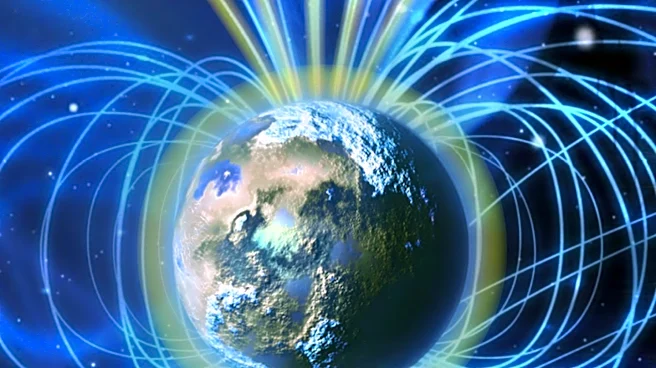
with observations indicates a weakness in the theory. They suggest that the current cosmological model requires increasingly convoluted theoretical structures to maintain its original vision, making it difficult to understand and practically untestable. Some physicists, like Eric Lerner and Geoffrey Burbidge, contend that cosmology has become overly reliant on aesthetic and quasi-religious motivations rather than empirical evidence. They point to the lack of direct observational evidence for dark matter, which is hypothesized to constitute about 90% of all matter, as a major concern. Alternative theories, such as plasma cosmology, propose that electromagnetism plays a more significant role in structuring the universe and offer different explanations for phenomena like the cosmic microwave background and element abundances, without the need for dark matter.
Why It's Important?
This debate is crucial because it challenges the very foundations of modern cosmology, impacting our understanding of the universe's origin, composition, and evolution. If the criticisms against the Big Bang theory and the concept of dark matter gain wider acceptance, it could necessitate a paradigm shift in astrophysics. This would affect research priorities, funding allocations for large-scale scientific projects, and the direction of theoretical physics. The implications extend to how scientific theories are developed and validated, raising questions about the role of empirical evidence versus theoretical elegance. A re-evaluation could lead to new avenues of research, potentially uncovering entirely different physical laws governing the cosmos. The discussion also highlights the philosophical aspects of science, questioning whether certain fields become resistant to radical departures due to established frameworks and peer review systems.
What's Next?
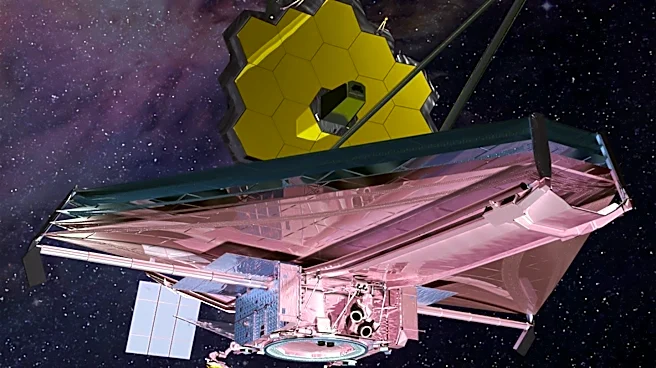
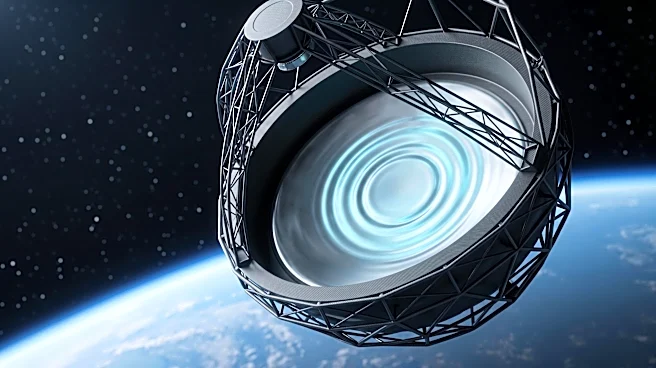
The future of cosmology will likely involve continued rigorous testing of both the Big Bang model and alternative theories. Researchers will persist in their efforts to directly detect dark matter particles through experiments like those at CERN's Axion Solar Telescope. Simultaneously, proponents of alternative cosmologies will strive to develop more detailed and testable predictions that can better explain observed phenomena without relying on concepts like dark matter. The scientific community will need to critically assess whether current theoretical frameworks are becoming too complex and untestable, potentially leading to a re-evaluation of methodological approaches in cosmology. Increased scrutiny of observational data, particularly from advanced telescopes, will be vital in either reinforcing or challenging existing models, potentially leading to a 'minor scientific revolution' as new evidence emerges or existing anomalies become irreconcilable with current theories.
Beyond the Headlines
Beyond the immediate scientific implications, this debate touches upon deeper philosophical and sociological aspects of scientific inquiry. The critique that cosmology might be influenced by 'philosophical prejudices' and an 'unresponsive community' raises questions about the objectivity and openness of scientific fields. It suggests that even in science, established paradigms can create a 'priesthood of high theory,' where elegance and symmetry might sometimes overshadow empirical data. This situation could lead to a stagnation of novel ideas and a reluctance to explore unconventional paths. The discussion also highlights the tension between theoretical predictions and observational evidence, reminding us that scientific progress often involves challenging deeply held beliefs. Ultimately, this ongoing discourse underscores the dynamic and self-correcting nature of science, even when faced with resistance to change, and emphasizes the importance of continuous skepticism and critical evaluation.