

What's Happening?
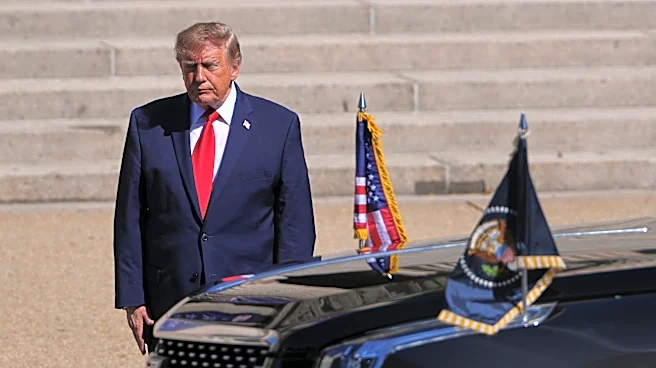
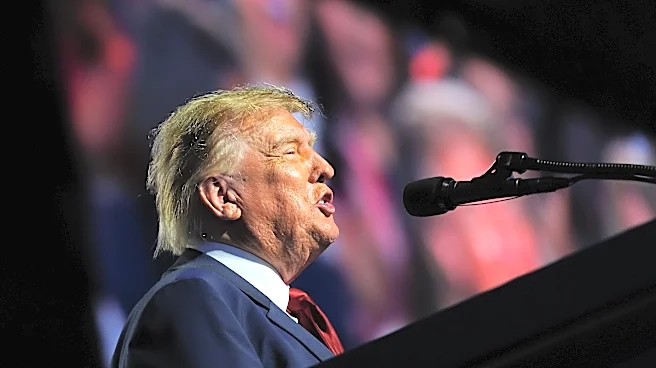
U.S. Representative Andy Barr (R-KY) has removed all references to President Trump from his gubernatorial campaign website. This action comes as President Trump's average approval rating is 21 percentage points underwater, according to RealClearPolitics,
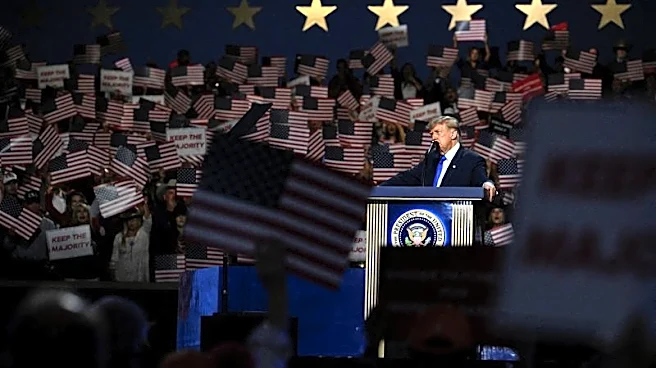
leading multiple Republicans to distance themselves from the president. Other Republican lawmakers, including Rep. Byron Donalds (R-FL) and Rep. Young Kim (R-CA), have taken similar steps on their respective campaign sites. This trend is occurring in a political environment where the Cook Political Report has updated its ratings for several Senate races, indicating a potentially difficult midterm cycle for Republicans, with some races shifting in favor of Democrats. Despite these developments, President Trump is undertaking a red-state swing, visiting states he previously carried by double digits, and is expected to campaign in battleground states in the coming weeks.
Why It's Important?
The decision by Representative Barr and other Republican candidates to remove references to President Trump from their campaign materials signals a strategic shift within the Republican Party as the midterm elections approach. This move suggests that some candidates perceive an association with President Trump as a potential liability rather than an asset in their campaigns, particularly in competitive races or states where public opinion of the president is low. This distancing could reflect an attempt to appeal to a broader electorate, including independent and moderate voters, who may be less inclined to support candidates closely aligned with the president. The broader implication is a potential weakening of President Trump's influence over the Republican Party's electoral strategy, forcing candidates to carve out more independent political identities. This could lead to a more diverse range of campaign messages and policy platforms within the GOP, potentially altering the party's long-term trajectory and its ability to unify around a single leader or ideology.
What's Next?
As the midterm elections draw closer, it is anticipated that more Republican candidates, especially those in toss-up or competitive districts, may continue to adjust their campaign strategies, potentially further distancing themselves from President Trump. President Trump, however, is expected to intensify his campaign efforts in battleground states, aiming to boost voter turnout for Republican candidates. The White House is also working to address political challenges, including discussions around diesel export restrictions and beef tariff suspensions, which could impact public sentiment. The effectiveness of these differing strategies—candidates distancing themselves versus President Trump's direct campaigning—will be closely watched as a barometer of President Trump's enduring influence within the Republican Party and his impact on the upcoming elections. The outcomes of these midterms will likely shape the future dynamics of the Republican Party and its approach to national elections.
Beyond the Headlines
The trend of Republican candidates distancing themselves from President Trump highlights a deeper internal struggle within the Republican Party regarding its identity and future direction. This strategic maneuver goes beyond mere electoral tactics; it reflects a potential re-evaluation of the party's core messaging and leadership. The long-term implications could include a gradual shift away from the 'Trump-era' Republicanism towards a more traditional conservative platform, or alternatively, a more fragmented party where different factions vie for influence. This dynamic could also impact voter engagement, as the electorate may perceive a lack of clear leadership or a divided party. Furthermore, it raises questions about the role of a former president in shaping future elections and the extent to which his endorsements or criticisms will continue to sway voters. The ethical dimension involves candidates balancing party loyalty with perceived electoral necessity, potentially leading to a more pragmatic, rather than ideologically driven, political landscape.