



What's Happening?
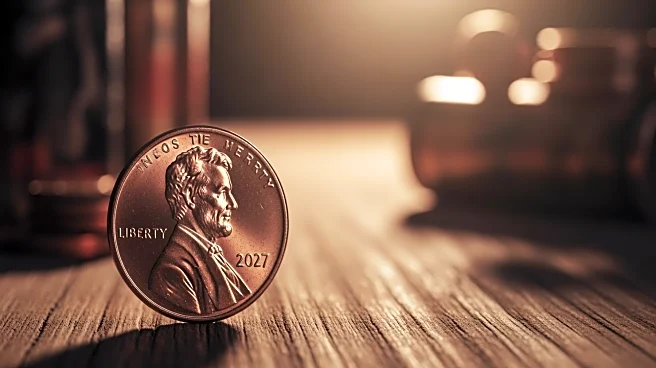
The U.S. Treasury Department has officially ceased the production of pennies, a decision that was marked by a symbolic 'funeral' outside the Lincoln Memorial. This move comes after President Trump's administration ordered the halt, citing economic inefficiencies.
The penny, which has been in circulation since 1909 and features President Abraham Lincoln, has been deemed too costly to produce, with each penny costing 3.7 cents to mint and distribute. The U.S. Treasury reportedly lost over $85 million last year due to the production of 3.2 billion pennies. Despite its historical significance, the penny has long been considered economically impractical, leading to its discontinuation.
Why It's Important?
The discontinuation of the penny reflects broader economic considerations and the need for efficiency in currency production. By eliminating the penny, the U.S. government aims to reduce unnecessary expenditure, as the cost of producing the coin far exceeds its face value. This decision could lead to changes in cash transactions, potentially rounding to the nearest nickel, and may impact businesses that rely on cash payments. Additionally, the move highlights a shift towards digital transactions and a cashless economy, as physical currency becomes less prevalent. The decision also raises questions about the future of other low-denomination coins and their relevance in modern commerce.
What's Next?
Following the halt in penny production, there may be initiatives to encourage the public to return existing pennies, possibly through buy-back programs. This could help reduce the number of pennies in circulation and allow the government to repurpose the metal. Additionally, the U.S. Mint plans to release limited edition collectible pennies, which could become valuable to collectors. Businesses and consumers will need to adapt to the absence of the penny, potentially adjusting pricing strategies and cash handling practices. The government may also evaluate the production of other coins, considering similar economic factors.
Beyond the Headlines
The end of the penny also carries cultural and nostalgic implications, as it has been a part of American life for over a century. The penny's removal may symbolize a broader trend towards simplifying and modernizing the U.S. monetary system. It also reflects changing attitudes towards small denominations in an era where digital payments are increasingly dominant. The decision may spark discussions about the value of tradition versus practicality in currency management, and how historical symbols are preserved or adapted in a rapidly evolving economic landscape.