







What's Happening?
German tank maker KNDS and Norway’s Ritek have commenced production of Leopard 2A8 tanks in Norway, marking a significant step in the 'Hansa' defense pact between the two nations. Production began on October 15 in Levanger, where 37 of the Norwegian Army’s
54 new tanks will be built. This industrial collaboration is part of a broader security partnership formalized in February through the Hansa Arrangement, which prioritizes maritime operations, combined-arms land warfare, rapid reinforcement, defense industry collaboration, and space-based surveillance. The partnership also includes a joint submarine program, with both countries operating six identical Type 212CD submarines, and collaboration on the next-generation 3SM maritime strike missile. Germany also contributed approximately 1,800 troops to Norway’s Cold Response exercise in March, and discussions are underway for German equipment pre-positioning in Norway.
Why It's Important?
This deepening defense alliance between Norway and Germany is a direct response to the evolving geopolitical landscape, particularly Russia’s full-scale invasion of Ukraine. For the U.S. and NATO, this pact strengthens the collective defense capabilities in the North Atlantic, a strategically vital region. Germany's increased military role in this area, including its P-8A Poseidon aircraft operating from Norwegian and Icelandic air bases to cover the GIUK gap, enhances surveillance and deterrence against potential threats. The industrial cooperation not only boosts the defense capabilities of both nations but also fosters interoperability within NATO, making the alliance more cohesive and effective. The joint production and shared military assets reduce reliance on external suppliers and create a more integrated defense industrial base, which is crucial for long-term security and readiness.
What's Next?
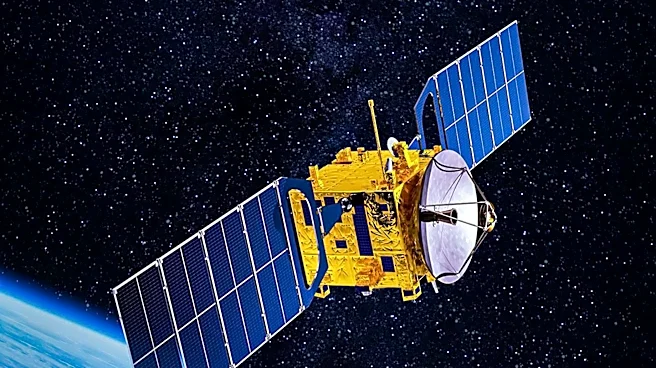
The production of Leopard 2A8 tanks will continue in Norway, with the facility having a stated capacity of up to 36 tanks annually. The ongoing submarine partnership and collaboration on missile development will further integrate the two nations' defense capabilities. Future steps include continued discussions on German equipment pre-positioning in Norway and the development of a bilateral space working group focusing on launch capabilities, space-based surveillance, and secure communications. This sustained cooperation is expected to enhance the security posture of both countries and contribute to NATO's overall strength in the North Atlantic region, with potential for further expansion into other defense technology areas.
Beyond the Headlines
The Hansa defense pact signifies a broader strategic realignment among European NATO members, driven by a renewed focus on collective security and regional defense in the face of heightened geopolitical tensions. Germany's growing dependence on Norwegian gas also adds an economic dimension to this security partnership, as protecting offshore infrastructure becomes a shared priority. The collaboration in space-based surveillance, particularly utilizing Norway's advantageous spaceport for polar orbits, highlights the increasing importance of space in modern defense strategies. This comprehensive approach, spanning land, sea, air, and space, reflects a recognition that modern security challenges require integrated and multi-domain responses, potentially influencing other NATO members to pursue similar bilateral or multilateral defense industrial collaborations.