




What's Happening?
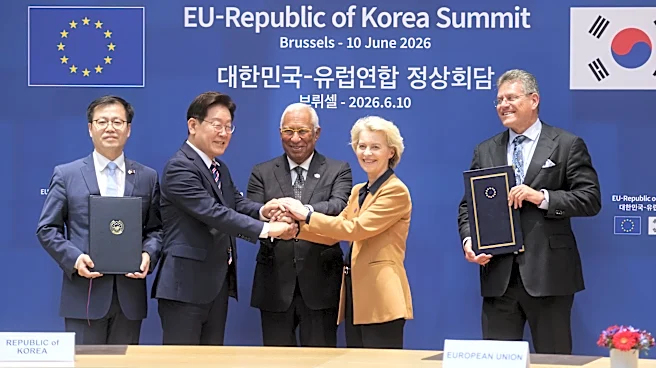
The Ministry of Oceans and Fisheries of South Korea has signed a letter of intent with the UN Environment Programme (UNEP) to collaborate on the successful hosting of the Fourth UN Ocean Conference (UNOC4) in Busan in 2028. This agreement, signed by Minister
of Oceans and Fisheries Hwang Jong-woo and UNEP Executive Director Inger Andersen during the 31st Conference of the Parties to the UN Framework Convention on Climate Change in Antalya, Turkey, aims to broaden international participation and integrate discussions on marine environmental issues. The UN Ocean Conference, a high-level international gathering in the ocean sector, occurs every three years. The partnership seeks to address ocean pollution, climate change, and marine ecosystem conservation in a more unified manner, moving away from previously separate approaches. The letter of intent outlines plans to expand conference participation through UNEP's Regional Seas Programme and co-host side events, including the 28th Intergovernmental Meeting of the Coordinating Body on the Seas of East Asia (COBSEA).
Why It's Important?
This collaboration is significant as it strengthens South Korea's role in global ocean environment governance and promotes a more integrated approach to critical marine issues. By leveraging UNEP's extensive network, the partnership is expected to increase international engagement in addressing challenges like ocean pollution and climate change, which have far-reaching impacts globally, including on U.S. coastal communities and marine industries. The focus on integrated discussions, linking various international agreements and initiatives, could lead to more cohesive and effective global strategies for ocean conservation. For the U.S., this could mean enhanced international cooperation on shared marine resources, improved data sharing, and potentially new frameworks for addressing transboundary marine environmental problems. The emphasis on the 'Ocean-Climate Nexus' highlights the interconnectedness of ocean health and climate action, a concept increasingly recognized as vital for sustainable development and economic stability.
What's Next?
Following the letter of intent, the Ministry of Oceans and Fisheries and UNEP plan to continue discussions towards signing a full Memorandum of Understanding (MOU) to identify specific areas of cooperation. This will involve further planning for the 2028 UN Ocean Conference in Busan, including detailed strategies for expanding participation and integrating various marine environment agendas. The collaboration is expected to foster a cooperative framework for discussions on international marine environment issues, linking existing agreements such as the Agreement on Marine Biodiversity of Areas Beyond National Jurisdiction, the Intergovernmental Negotiating Committee, the Intergovernmental Panel on Climate Change, and the International Maritime Organization. Discussions on implementing a successor framework to the Sustainable Development Goals (SDGs) are also anticipated. South Korea aims to play a central role in global ocean environment governance through these strengthened international cooperations.
Beyond the Headlines
The partnership between South Korea and UNEP for the 2028 UN Ocean Conference reflects a growing global recognition of the need for holistic approaches to environmental challenges. The integration of discussions on ocean pollution, climate change, and marine ecosystem conservation under one umbrella signifies a shift from siloed efforts to a more interconnected understanding of planetary health. This development could set a precedent for future international environmental conferences, promoting cross-sectoral collaboration and comprehensive policy-making. The emphasis on the 'Ocean-Climate Nexus' underscores the ethical imperative to protect marine environments not only for their intrinsic value but also for their crucial role in regulating the global climate and supporting human livelihoods. This initiative could also influence the development of new legal and cultural frameworks that prioritize ocean health as a fundamental component of global sustainability.