



What's Happening?
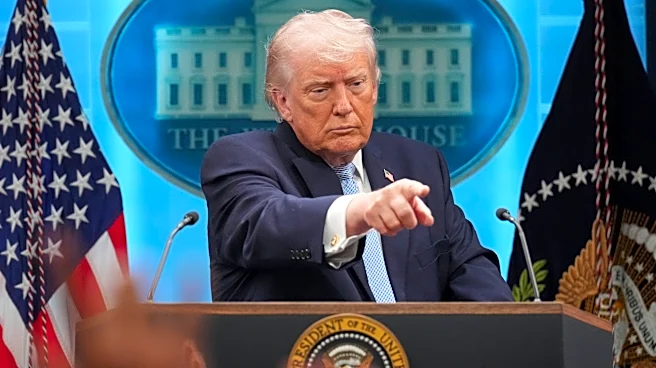
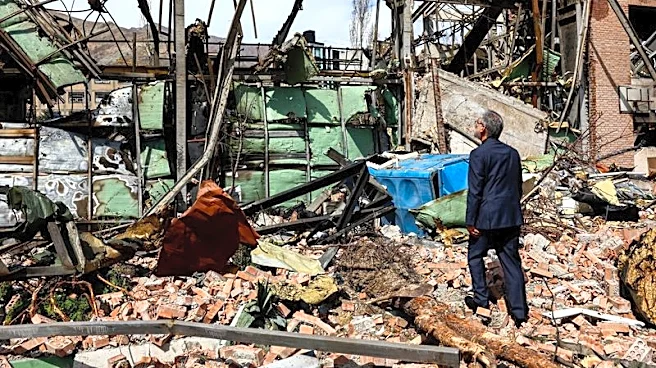
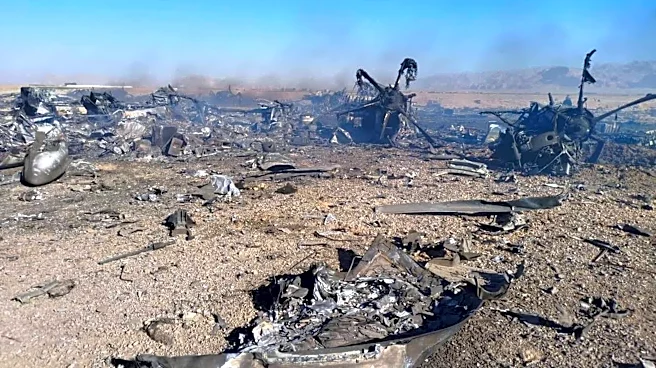
US Secretary of Defense Pete Hegseth announced a decisive military victory against Iran, following a series of strategic operations. During a press conference, Hegseth detailed that the US had conducted 800 strikes, significantly damaging Iran's defense
infrastructure. The operation, named Epic Fury, reportedly utilized less than 10% of US military capabilities. Iranian Supreme Leader Mojtaba Khamenei was reported to be wounded and disfigured. The US military's actions have led to a ceasefire, with Iran allegedly requesting the cessation of hostilities. The US has committed to ensuring the terms of the ceasefire are upheld, particularly concerning the Strait of Hormuz, which remains open for international transit. Additionally, the US has demanded Iran relinquish its enriched uranium, with Hegseth stating that the US would otherwise remove it by force.
Why It's Important?
This development marks a significant shift in US-Iran relations and has potential implications for regional stability in the Middle East. The military success claimed by the US could deter future aggressive actions by Iran, impacting its military capabilities for years. The destruction of a large portion of Iran's defense systems and naval forces may alter the balance of power in the region, affecting global oil markets and international shipping routes through the Strait of Hormuz. The US's firm stance on Iran's nuclear capabilities could influence future diplomatic negotiations and international policies regarding nuclear proliferation. Allies, particularly Israel, have been acknowledged for their support, which may strengthen military and political alliances in the region.
What's Next?
The immediate future will likely involve monitoring the ceasefire's adherence and assessing Iran's response to the US's demands regarding its nuclear materials. The US military presence in the region is expected to continue to ensure compliance with the ceasefire terms. Diplomatic efforts may intensify to address the broader implications of the conflict, including potential humanitarian concerns and the rebuilding of Iran's infrastructure. The international community will be watching closely to see how Iran navigates its diminished military capacity and the potential for internal political shifts as a result of the conflict.
Beyond the Headlines
The conflict raises ethical and legal questions about the use of military force and the impact on civilian populations. The destruction of Iran's defense infrastructure could lead to long-term economic challenges for the country, affecting its civilian population. The US's approach to Iran's nuclear capabilities may set a precedent for how similar situations are handled globally, influencing international norms and treaties related to nuclear disarmament. The role of allies, such as Israel, highlights the complex web of international relations and the potential for shifts in alliances based on military engagements.