







What's Happening?
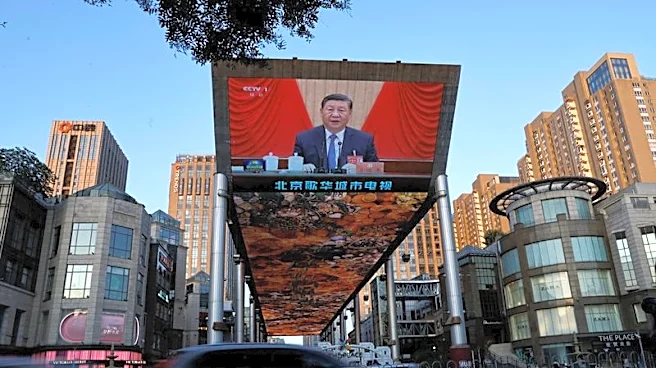
Graham Webster, a lecturer and research scholar at Stanford University’s Center for International Security and Cooperation and editor-in-chief of the DigiChina Project, analyzes China's approach to open-weight AI models. Despite Chinese President Xi Jinping's
recent call for 'open source and openness, cooperation and sharing' in AI development, there's an underlying tension with the need for 'security and controllability.' This duality, enshrined in Chinese legal texts, suggests that while China embraces open models, it also prioritizes security. Carnegie Endowment for International Peace senior fellow Matt Sheehan notes that 'control' extends beyond AI systems going rogue to include broader disaster prevention. Chinese companies like DeepSeek, Z.ai, and Moonshot continue to release open-weight models, offering lower-priced, customizable competition to closed models from companies like OpenAI and Anthropic. The Chinese government has not yet barred these releases, indicating that officials do not view them as an unacceptable risk, at least for now. This stance is influenced by the economic and reputational benefits, such as showcasing Chinese technology globally and challenging the business models of U.S. AI giants.
Why It's Important?
The ongoing debate and China's policy decisions regarding open-weight AI models have significant implications for global technology development, cybersecurity, and international relations. China's willingness to allow open-weight models, which can be downloaded and used by anyone, including for potentially malicious purposes, presents a complex challenge. While it fosters innovation and global adoption of Chinese technology, it also raises concerns about potential misuse, such as cyberattacks or the development of harmful biological agents. The U.S. and its allies are closely watching China's balancing act between promoting AI development and ensuring national security. This situation could influence the global regulatory landscape for AI, potentially leading to divergent approaches between countries and impacting the competitiveness of U.S. AI firms. The perceived risks and benefits of open-source AI are central to this discussion, with potential consequences for national security, economic competition, and the future of AI governance.
What's Next?
The future of China's open-weight AI model policy remains uncertain, as the government continues to navigate the tension between development and security. Officials may curb open releases if security risks, particularly those related to cyber threats or the development of dangerous biological/chemical agents, outweigh perceived economic and reputational benefits. However, China's current assessment suggests that these risks have not yet reached a critical threshold. The country may also learn from incidents involving U.S. AI models, potentially giving them time to implement targeted mitigations before encountering similar issues. Companies themselves could also shift strategies, opting for closed models for business reasons, as seen with Alibaba Cloud's initial decision regarding its Qwen 3.6 series. The evolving relationship between government, industry, and technological advancements will dictate future actions, with potential for new regulations, international collaborations, or increased competition in the AI sector. A major incident involving an open-weight model could significantly alter Beijing's approach.
Beyond the Headlines
The discussion surrounding China's open-weight AI models delves into deeper implications concerning technological sovereignty, geopolitical influence, and the ethics of AI development. China's strategy of promoting open-source AI can be seen as a move to establish its technological leadership and create a global ecosystem reliant on its innovations, potentially counteracting U.S. efforts to control chip exports. This approach also highlights the inherent tension between fostering rapid technological advancement and ensuring responsible, secure deployment. The potential for AI to be used for both beneficial and harmful purposes raises ethical questions about accountability, control, and the societal impact of powerful technologies. The comparison to past U.S. scholarly expectations about China's democratization suggests a tendency to project Western frameworks onto Chinese policy, underscoring the need for a nuanced understanding of China's unique political and technological landscape. The long-term shifts could include a more fragmented global AI landscape, with different regulatory and ethical standards emerging in various regions.