







What's Happening?
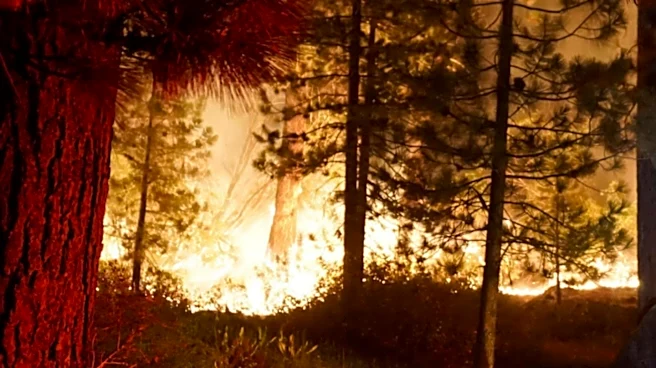
A wildfire near McLoud, Oklahoma, burned approximately 40 acres on Wednesday, prompting evacuations and a coordinated response from firefighters across Pottawatomie and Lincoln counties. The blaze resulted in damage or destruction to multiple structures,
though an exact count of affected homes was not immediately available. The fire generated heavy smoke and high flames, with one property owner, Billy Fisher, reporting flames reaching about 100 feet and occasional explosions, possibly from ammunition or other items within a home. Residents and good Samaritans, like Gary Wheat and his employees, played a crucial role in assisting with evacuations, helping about 15 people, including a woman caring for five disabled family members, to safety. Firefighters from multiple agencies, supported by aerial firefighting efforts, worked to contain the blaze. As of Wednesday night, evacuation orders remained in effect in areas near the fire, and Lincoln County Emergency Management was assessing the extent of property damage.
Why It's Important?
This wildfire, though smaller in acreage compared to some others, highlights the immediate and severe threat that even relatively contained fires pose to residential areas. The damage to multiple structures and forced evacuations underscore the direct impact on homeowners and communities, leading to displacement and significant property loss. The rapid spread of the fire and the intensity of the flames, as described by witnesses, demonstrate the unpredictable and dangerous nature of wildfires, especially when they encroach upon populated zones. The collaborative response from multiple county fire departments and the crucial role of community members in assisting with evacuations exemplify the importance of local resilience and mutual aid during emergencies. The incident also brings attention to the potential hazards within homes, such as ammunition, that can exacerbate fire dangers for first responders.
What's Next?
Firefighters will continue to work on extinguishing remaining hot spots and ensuring the fire is fully contained. Lincoln County Emergency Management will proceed with assessing the full extent of property damage, which will be crucial for residents seeking assistance and for recovery efforts. Evacuation orders will likely remain in place until authorities deem the area safe for residents to return. Investigations into the exact cause of the fire will be conducted to inform future prevention strategies. The incident may also lead to discussions about community preparedness, evacuation plans, and the importance of defensible space around homes in fire-prone areas. The 'Oklahoma standard' of neighborly help, as noted by a resident, will likely continue to be a key element in the community's recovery.
Beyond the Headlines
The McLoud wildfire, while localized, reflects a broader trend of increasing wildfire risk in areas previously considered less vulnerable, often due to changing climate patterns and expanding urban-wildland interfaces. The spontaneous acts of heroism by residents like Gary Wheat highlight the critical role of informal community networks in emergency response, often preceding or supplementing official efforts. This incident also subtly points to the psychological impact on residents who witness their homes and communities threatened by fire, leading to stress and trauma. The 'Oklahoma standard' mentioned by a resident speaks to a cultural value of mutual support in times of crisis, which is a vital, though often unquantified, asset in disaster resilience. Understanding and fostering these community-level responses can be as important as formal emergency services in mitigating the human impact of such events.