





What's Happening?
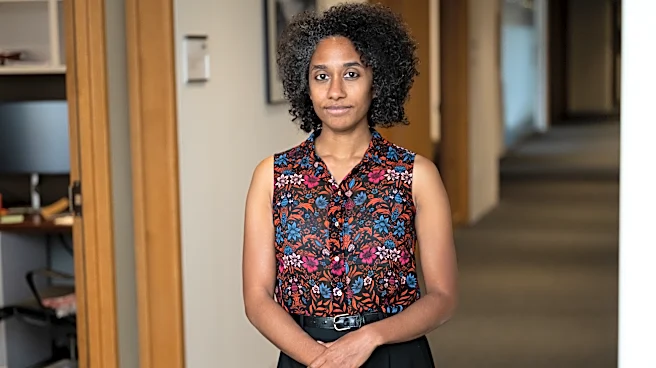
Sociologist Holly Jean Buck emphasizes that building clean energy infrastructure alone is insufficient to achieve international climate goals. She argues that an equitable process for phasing out fossil fuels must accompany clean energy development. Buck proposes
the creation of democratic planning mechanisms to establish timelines for decarbonization. Her vision includes transitioning the fossil fuel industry's infrastructure and personnel towards carbon removal efforts and fostering social buy-in for shifting energy sources. Additionally, Buck advocates for treating climate technologies, such as carbon removal, as public utilities managed by governments or regulatory bodies. Her work focuses on the social, ethical, and political dimensions of emerging climate and energy policies, aiming to ensure just and equitable implementation of climate solutions. She explores governance structures for various climate responses, from local natural resource management to global climate interventions like solar radiation modification and carbon removal.
Why It's Important?
Buck's perspective is crucial for U.S. climate policy as it highlights the need to move beyond technological solutions to address the social and political complexities of decarbonization. By advocating for democratic planning and equitable processes, she underscores the importance of community engagement and fair transitions for workers and regions currently dependent on fossil fuels. Treating climate technologies as public utilities could significantly alter the landscape of climate investment and regulation in the U.S., potentially leading to more centralized and publicly accountable management of critical climate solutions. This approach could mitigate potential inequalities and ensure that the benefits of clean energy and carbon removal are broadly distributed, rather than concentrated among private entities. Her work suggests that a successful energy transition in the U.S. requires not only technological innovation but also robust social and political frameworks that prioritize justice and public interest.
What's Next?
The ideas put forth by Holly Jean Buck could influence future U.S. policy discussions on climate change and energy transition. Policymakers and climate activists may increasingly consider integrating democratic planning mechanisms into decarbonization strategies. This could involve establishing new governmental bodies or expanding the mandates of existing ones to oversee the equitable phase-out of fossil fuels and the deployment of climate technologies as public utilities. The fossil fuel industry might face increased pressure to retrain its workforce and repurpose its infrastructure for carbon removal, potentially leading to new federal programs supporting such transitions. Furthermore, there could be a growing emphasis on public engagement and social buy-in campaigns to ensure broader acceptance and support for climate action, moving beyond top-down mandates to more community-driven approaches.
Beyond the Headlines
Buck's work delves into the deeper ethical and cultural dimensions of climate change, suggesting that a successful transition requires a fundamental shift in societal values and governance. Her call for democratic planning mechanisms challenges traditional market-driven approaches to energy policy, advocating for a more collective and publicly accountable decision-making process. This could lead to a re-evaluation of the role of government in managing essential resources and technologies, potentially expanding the concept of public utilities to include climate-critical infrastructure. The idea of transitioning fossil fuel personnel and infrastructure to carbon removal also highlights the potential for a 'just transition,' addressing the economic and social impacts on communities historically reliant on fossil fuels. This approach seeks to prevent the creation of new inequalities during the shift to a clean energy economy, fostering a more inclusive and sustainable future.