
What's Happening?
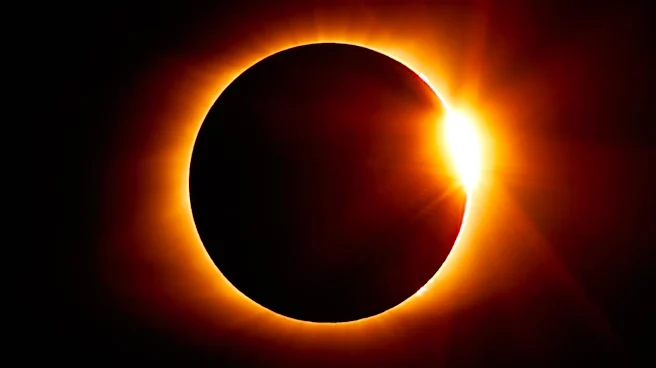
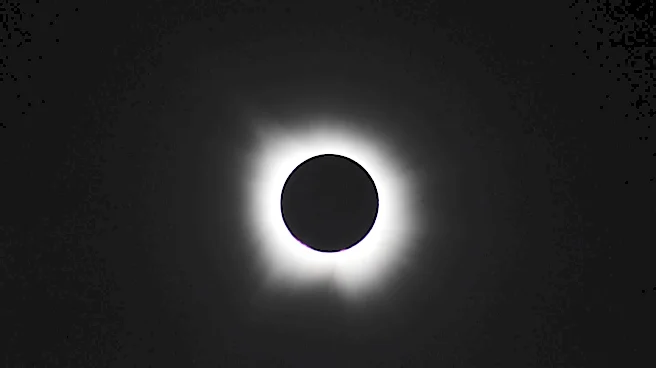
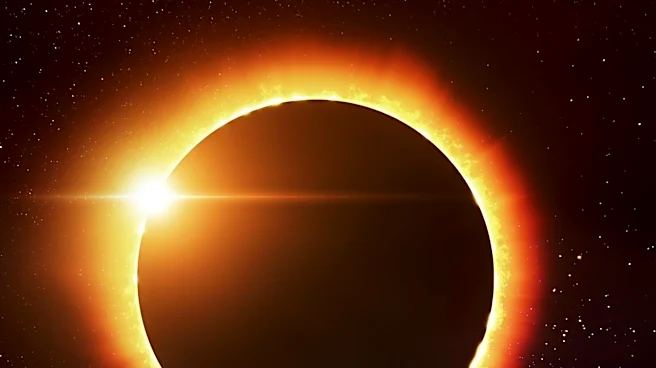
The European Space Agency (ESA) is preparing for a total solar eclipse on August 12, 2026, which will be visible across Greenland, Iceland, Spain, and northeastern Portugal. Researchers are using advanced
computer simulations and solar observations to predict the appearance of the solar corona during the eclipse. These efforts aim to improve models of the Sun's magnetic environment and enhance space weather forecasts. The eclipse provides a unique opportunity to test these models against real-world observations, offering insights into solar activity and its effects on Earth.
Why It's Important?
Understanding the Sun's magnetic environment is crucial for predicting space weather, which can impact satellite operations, communication systems, and power grids on Earth. Improved models and forecasts can provide earlier warnings of solar storms, allowing for better preparation and mitigation of potential disruptions. The eclipse serves as a natural experiment to validate and refine these models, contributing to the safety and reliability of critical infrastructure. This research also supports future space missions and the development of technologies to monitor and respond to space weather events.