


What's Happening?
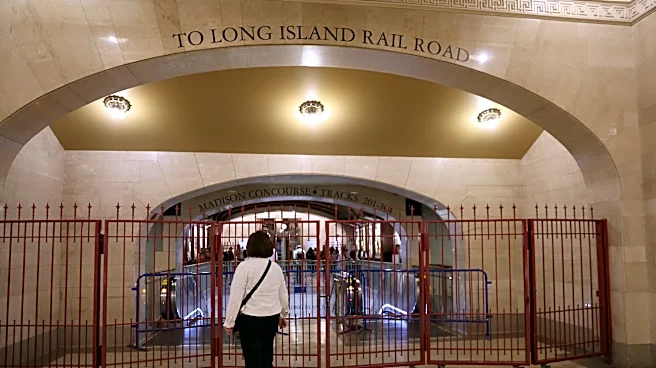
The Long Island Rail Road (LIRR), the busiest commuter line in the United States, has suspended its services for the first time in over 30 years due to a strike by approximately 3,500 engineers, electrical workers, and signalmen. The strike, which began
on May 16, 2026, follows unsuccessful negotiations between labor groups and transit officials over wage increases. The unions are demanding a 5% wage increase to counter inflation, while the Metropolitan Transportation Authority (MTA) has offered a 4.5% raise with conditions. The strike is expected to significantly disrupt transportation for around 300,000 daily commuters, increasing traffic on Long Island roadways as riders seek alternative travel options.
Why It's Important?
The strike highlights ongoing tensions between labor unions and transit authorities over wage adjustments in response to inflation. The LIRR work stoppage could have substantial economic repercussions, potentially costing the region $61 million in lost economic activity per day. The situation underscores the challenges faced by public transportation systems in balancing budget constraints with the need to offer competitive wages. The strike also poses a significant inconvenience to commuters and could lead to increased traffic congestion and delays, affecting both daily travel and the upcoming peak tourist season on Long Island.
What's Next?
Negotiations between the MTA and the unions are expected to continue as both parties seek a resolution to the strike. The MTA has implemented contingency plans, including shuttle buses to mitigate the impact on commuters. However, the strike's duration remains uncertain, and its resolution will depend on the willingness of both sides to compromise on wage demands. The outcome of these negotiations could set a precedent for future labor disputes within the transit sector, particularly as other labor groups, such as the Transport Workers Union, are also in contract negotiations.