
What's Happening?
The International Energy Agency (IEA) has reported that oil supply disruptions from the Middle East are expected to significantly impact Europe's economy starting in April. This disruption is primarily due to the closure of the Strait of Hormuz, which
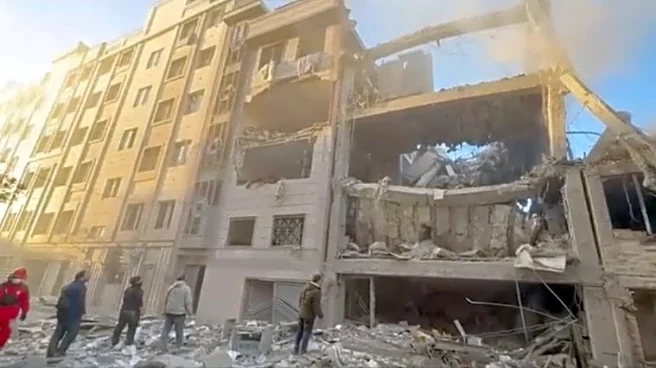
has severely limited oil supplies. According to IEA head Fatih Birol, more than 12 million barrels of oil have been lost since the onset of the U.S.-Israel conflict with Iran, which has involved Tehran's attacks on energy assets and shipping restrictions. The loss of oil in April is projected to be double that of March, exacerbating inflation and hindering economic growth in several countries. The shortage of jet fuel and diesel, already affecting Asian countries, is anticipated to hit Europe soon. The IEA is considering releasing additional strategic reserves after its members agreed to release a record 400 million barrels of oil.
Why It's Important?
The disruption in oil supply is poised to have a profound impact on global energy markets, particularly in Europe, which relies heavily on Middle Eastern oil. The anticipated shortages could lead to increased energy prices, contributing to inflation and slowing economic growth. This situation is compounded by the ongoing geopolitical tensions in the region, which have already damaged key energy assets. The potential release of strategic reserves by the IEA underscores the severity of the crisis, as it seeks to stabilize the market and mitigate economic fallout. The current disruption is considered more severe than past oil crises, highlighting the vulnerability of global energy supply chains to geopolitical conflicts.
What's Next?
The IEA's potential release of additional strategic reserves will be closely watched as a measure to alleviate the supply shortage. European countries may need to explore alternative energy sources or increase energy efficiency to cope with the reduced oil supply. The ongoing conflict in the Middle East could lead to further disruptions, necessitating diplomatic efforts to stabilize the region. Energy-dependent industries and consumers in Europe will likely face higher costs, prompting governments to consider policy interventions to cushion the economic impact.