







What's Happening?
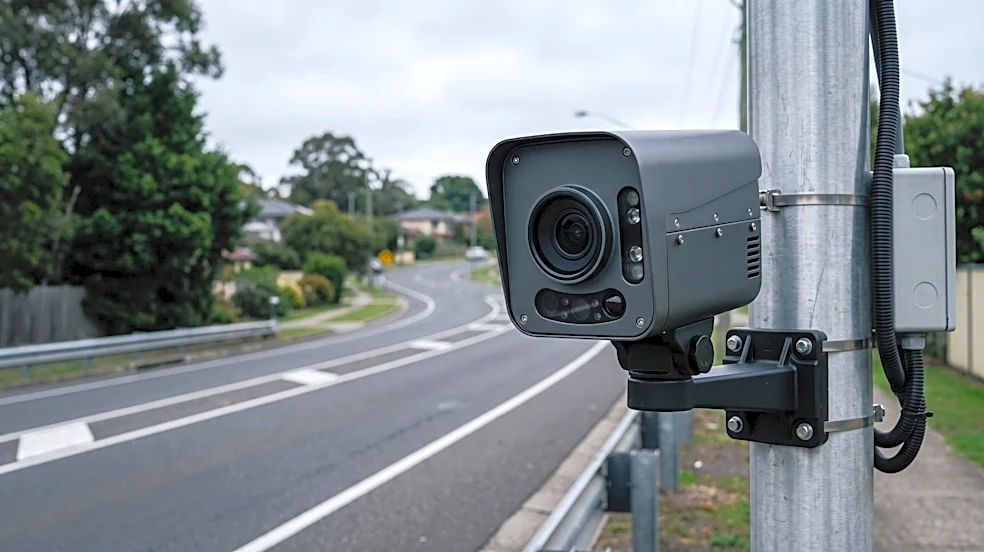
City policies in Moorhead, Fargo, and West Fargo regarding Automated License Plate Reader (ALPR) cameras, also known as Flock cameras, are facing criticism for dismissing privacy concerns. These policies assert that individuals have no reasonable expectation
of privacy when driving on public streets, justifying the installation of ALPR cameras to capture vehicle movements without a warrant. Critics argue that these policies disregard privacy rights by using a 1983 U.S. Supreme Court case (Knotts) to justify widespread surveillance, despite advancements in technology that allow for comprehensive tracking and data storage.
Why It's Important?
This issue is important because it highlights a growing tension between public safety measures and individual privacy rights in the digital age. The widespread deployment of ALPR technology by law enforcement and private companies raises significant questions about surveillance, data retention, and the potential for misuse of personal information. The reliance on a decades-old Supreme Court precedent, which predates modern surveillance capabilities, underscores the need for updated legal frameworks to address technological advancements. This debate affects all citizens who use public roads, as their movements can be tracked and stored, potentially creating detailed profiles without their consent or specific suspicion of wrongdoing.
What's Next?
The debate over ALPR policies in Moorhead, Fargo, and West Fargo is likely to continue, potentially leading to further legal challenges or calls for policy revisions. Critics suggest that there will be future court cases to address the privacy implications of such pervasive tracking technologies. Local city councils and law enforcement agencies may face pressure to re-evaluate their policies in light of evolving legal interpretations of privacy, such as recent Supreme Court decisions regarding cell phone location data. This ongoing discussion could influence how surveillance technologies are implemented and regulated in other U.S. cities.
Beyond the Headlines
Beyond the immediate policy debate, this situation touches upon fundamental questions about the balance of power between the state and its citizens, and the evolving definition of privacy in a technologically advanced society. The commercialization of surveillance technology by companies like Flock, which monetize data collection, adds another layer of complexity. This issue has ethical implications regarding the creation of a 'surveillance society' where every movement is recorded and analyzed. It also raises concerns about potential biases in how such data might be used and the long-term impact on civil liberties, prompting a broader societal discussion on the limits of government and corporate data collection.