



What's Happening?
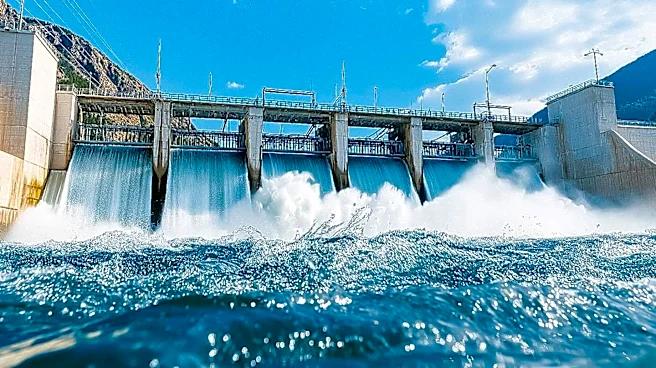
Hydroelectric power (HEP) is a method of generating electricity by harnessing the energy of falling water. The fundamental process involves a dam that holds back river water, creating a reservoir. From this reservoir, water is directed down a large pipe,
known as a penstock, where it gains speed due to gravity. This fast-moving water then strikes and spins a turbine. The rotation of the turbine, in turn, drives a generator, which is the component responsible for producing electricity. After passing through the turbine, the water is returned to the river downstream from the dam. For a site to be suitable for HEP development, several conditions must be met, including a large and consistent volume of water, a significant drop in elevation or a narrow gorge suitable for dam construction, and hard, impermeable rock for stable foundations. Additionally, human factors such as a market for the electricity, sufficient capital for construction, and technical expertise are crucial for successful implementation.
Why It's Important?
Hydroelectric power is a significant source of renewable energy globally, offering a clean alternative to fossil fuels. Its importance lies in its ability to provide a reliable and dispatchable power supply, unlike intermittent sources such as solar and wind, as water flow can often be regulated. For the U.S., HEP contributes to energy independence and reduces greenhouse gas emissions, aligning with climate change mitigation goals. The development of HEP projects can also bring economic benefits, including job creation during construction and operation, and can support industrial growth by providing affordable electricity. However, these projects also have substantial impacts, such as the displacement of communities, alteration of river ecosystems, and potential for siltation in reservoirs, which can reduce their long-term efficiency. Understanding the mechanics and requirements of HEP is crucial for evaluating its role in a diversified energy portfolio and for addressing the environmental and social considerations associated with its development.
What's Next?
The future of hydroelectric power in the U.S. involves a balance between maintaining existing infrastructure and exploring new, potentially smaller-scale developments. Many existing HEP facilities are aging and require significant investment for modernization and upgrades to improve efficiency and safety. There is also a growing interest in 'run-of-river' hydroelectric systems, which do not require large dams and reservoirs, thereby reducing some of the environmental impacts associated with conventional HEP. These smaller systems could be integrated into existing waterways or developed in areas where large-scale projects are not feasible or desirable. Additionally, advancements in turbine technology and operational management could further enhance the output and flexibility of hydroelectric plants. Policy discussions will likely continue to focus on balancing the benefits of clean energy generation with the environmental and social costs, potentially leading to more stringent regulations for new projects and incentives for sustainable upgrades to existing ones.
Beyond the Headlines
Beyond its role as an energy source, hydroelectric power has profound implications for water management, regional development, and international relations. Large dams, while generating electricity, also serve purposes such as flood control, irrigation, and water supply, making them multi-functional infrastructure projects. However, the construction of these dams can alter natural river flows, impacting downstream ecosystems, agriculture, and communities, sometimes across national borders. This can lead to complex geopolitical issues, particularly in transboundary river basins. The ethical considerations surrounding the displacement of indigenous populations and the loss of cultural heritage sites due to reservoir creation are also significant. Long-term, the sustainability of HEP is influenced by climate change, which can alter precipitation patterns and river flows, affecting the reliability of water resources for power generation. Therefore, the planning and operation of hydroelectric projects require a holistic approach that considers ecological, social, economic, and political dimensions.