





What's Happening?
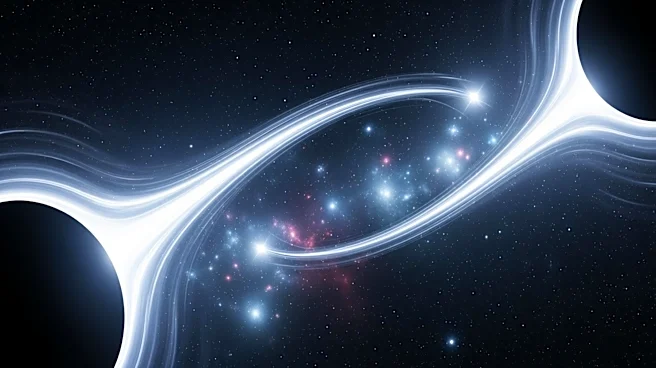
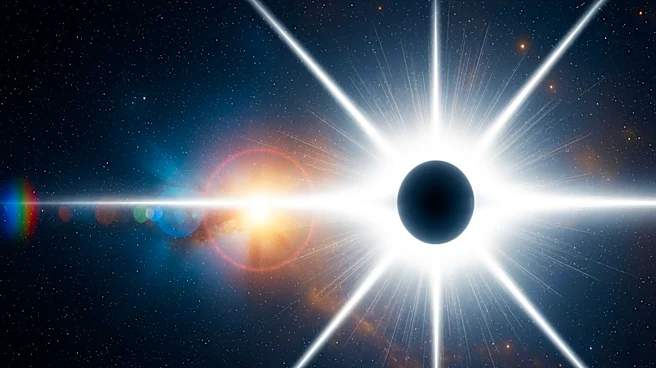
Scientists have successfully quantified the energy output of the first black hole ever discovered, Cygnus X-1, which is located approximately 7,000 light-years from Earth. This black hole, part of a binary system with a companion star, emits jets that
shine as brightly as 10,000 suns and travel at half the speed of light. The study, published in Nature Astronomy, highlights the jets as some of the most energetic phenomena in the cosmos. The research team, led by Steve Prabu from the University of Oxford, utilized radio telescopes worldwide to measure the jets' energy output, revealing that about 10% of the energy released as matter falls towards the black hole is carried away by these jets.
Why It's Important?
The findings provide significant insights into the behavior and impact of black holes, particularly in understanding how they influence their surroundings and larger cosmic structures. By quantifying the energy output of the jets, researchers can better gauge the rate at which black holes feed and grow. This research enhances our understanding of the role black holes play in shaping galaxies and influencing cosmic evolution. The ability to measure such phenomena also advances the field of astrophysics, offering a clearer picture of the universe's most powerful entities.
What's Next?
Future research may focus on further exploring the mechanisms behind jet formation and their impact on galactic environments. Scientists might also investigate other black holes to compare their energy outputs and behaviors, potentially leading to broader conclusions about black hole dynamics. Continued advancements in telescope technology and data analysis will likely facilitate more detailed studies of these cosmic phenomena.