


What's Happening?
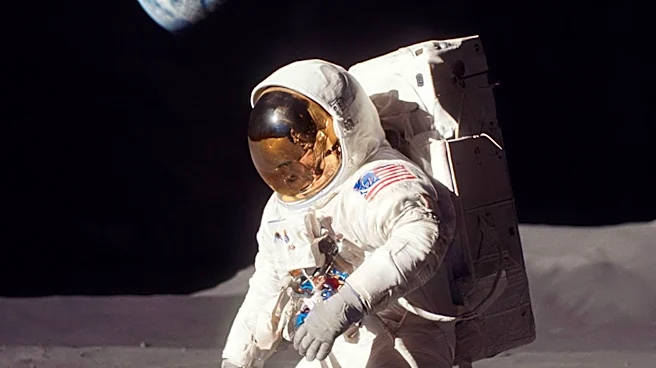
Researchers have proposed retrieving one of the 96 waste bags and containers left on the Moon by Apollo astronauts across six landings. The primary objective is not to clean up the lunar surface, but to investigate whether any human microbes could have survived
up to 57 years of exposure to lunar radiation, vacuum, and extreme temperature swings. These waste bags, which include human waste, food wrappers, and other refuse, have been exposed to the harsh lunar environment since as early as July 1969. While it is widely believed that nothing in them could still be alive, scientists aim to test this hypothesis. Even if no viable cells are found, the retrieved material could provide valuable data on how cells, DNA, and other biological traces decay in an extraterrestrial environment, offering insights into astrobiology and planetary protection.
Why It's Important?
This proposed retrieval mission holds significant implications for astrobiology, planetary protection, and future long-duration human space missions. Understanding the survival rates of terrestrial microbes in the lunar environment is crucial for developing effective planetary protection protocols, ensuring that human exploration does not inadvertently contaminate other celestial bodies. If microbes are found to have survived, it would challenge existing models of microbial resilience in space and could inform the design of future lunar habitats and life support systems. Conversely, even sterile samples would provide critical data on the degradation of biological materials, which is essential for assessing the risks of biological contamination and for interpreting potential biosignatures on other planets. This research directly impacts U.S. space exploration strategies, particularly those focused on establishing a sustained human presence on the Moon and Mars.
What's Next?
The proposal to retrieve an Apollo waste bag would require careful planning, considering both scientific and archaeological aspects, as the landing sites are protected historic landscapes. A robust protocol would need to be established to prevent terrestrial contamination during retrieval, transport, and laboratory analysis. This would involve sampling the exterior before opening the package, using sterile blanks, and meticulously recording all potential sources of contamination, including the recovery crew, suits, tools, and spacecraft. Genetic sequencing could help trace contaminants, but the chain of custody would be paramount to ensure the scientific validity of any findings. The results, whether indicating survival or complete degradation, would provide a baseline understanding of biological material behavior on the Moon before future crewed missions introduce more complex contamination scenarios.
Beyond the Headlines
Beyond the immediate scientific objectives, this endeavor touches upon profound ethical and philosophical questions regarding humanity's footprint in space. The waste bags represent an early, unintentional experiment in astrobiology, and their retrieval would transform them into deliberate scientific samples. This raises discussions about the preservation of historical sites on other celestial bodies versus their potential for scientific inquiry. The findings could also influence our understanding of panspermia—the hypothesis that life exists throughout the universe and is distributed by meteoroids, asteroids, and planetoids. If terrestrial microbes can survive decades on the Moon, it suggests a greater potential for life to travel between celestial bodies. This research could fundamentally alter our perspective on the uniqueness of Earth's biology and the potential for life beyond our planet, shaping long-term space policies and scientific priorities.