









What's Happening?
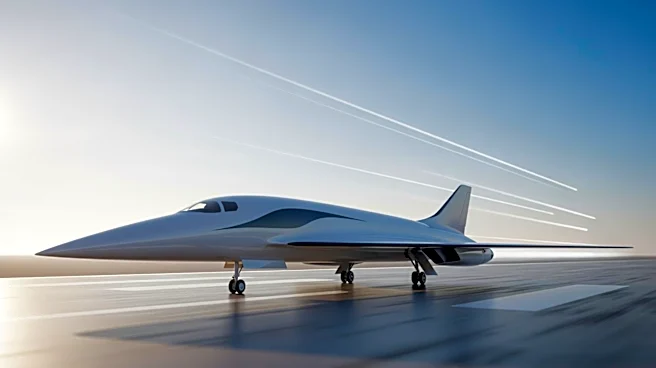
NASA's X-59 quiet-supersonic demonstrator has reached significant milestones in its flight testing, achieving an altitude of 55,000 feet and a speed of Mach 1.4 during a flight on June 12, 2026. These achievements are crucial as NASA prepares for a series
of 'community overflights' to evaluate public perception of the aircraft's sonic signature. The X-59 is designed to produce a quieter sonic boom, likened to the sound of a slammed car door, rather than the disruptive booms of traditional supersonic aircraft. The ultimate goal is to provide data to the Federal Aviation Administration to potentially lift the ban on overland civilian supersonic flight.
Why It's Important?
The development of the X-59 represents a significant advancement in aviation technology, with the potential to revolutionize air travel by making supersonic flight over land feasible. This could drastically reduce travel times and open new possibilities for commercial aviation. The success of the X-59 could lead to regulatory changes, allowing for the reintroduction of supersonic passenger flights, which have been banned due to noise concerns. The project also highlights the collaboration between NASA and Lockheed Martin in pushing the boundaries of aerospace engineering and innovation.
What's Next?
NASA will continue with months of flight testing to evaluate the X-59's performance at various altitudes and conditions. An 'acoustic validation' phase will measure the aircraft's supersonic acoustic signature to ensure it meets design expectations. Following these tests, NASA plans to conduct community overflights to gather public feedback on the noise levels. The findings will be submitted to the FAA, potentially influencing future regulations on supersonic flight. The outcome of this project could pave the way for new commercial opportunities and advancements in aviation technology.