






What's Happening?
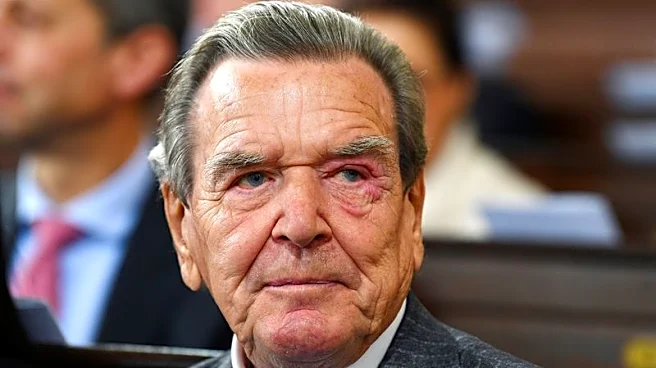
German officials have expressed skepticism towards Russian President Vladimir Putin's proposal to appoint former German Chancellor Gerhard Schröder as a mediator in peace talks concerning the Ukraine war. The suggestion was met with caution, as officials noted
it as part of a series of 'bogus offers' from Russia. Schröder, who has maintained a close relationship with Putin, previously held significant roles in Russian energy projects. The proposal comes amid a fragile US-mediated ceasefire between Russia and Ukraine, which has seen violations from both sides. The ceasefire's stability is under question as both nations accuse each other of attacks, with recent Russian drone strikes resulting in casualties.
Why It's Important?
The proposal of Schröder as a mediator is significant due to his historical ties with Russia, which could influence the dynamics of the peace talks. The skepticism from German officials highlights the complexities of international diplomacy, especially when involving figures with perceived biases. The ongoing ceasefire violations underscore the challenges in achieving lasting peace in the region. The situation impacts global political stability and has implications for international relations, particularly between Western nations and Russia. The involvement of US envoys in the peace process indicates the strategic importance of the conflict to the United States and its allies.
What's Next?
The next steps involve continued diplomatic efforts, with US envoys planning to visit Moscow to further discussions. The international community will closely monitor the ceasefire's stability and any developments in the proposed mediation. The response from Ukraine and other European partners to Schröder's potential role will be crucial in determining the feasibility of the proposal. Additionally, the geopolitical landscape may shift depending on the outcomes of these diplomatic engagements and the ability of involved parties to maintain or restore peace.