



What's Happening?
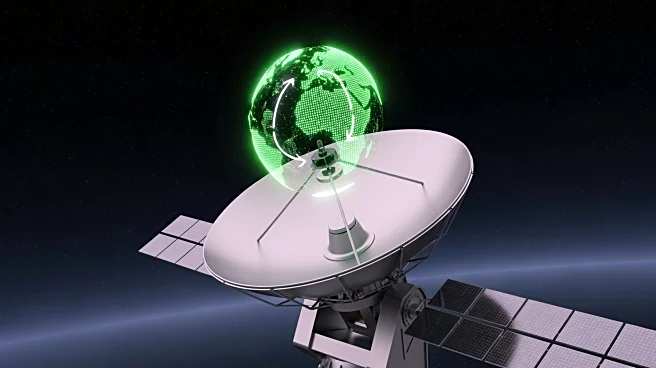
The European Space Agency's Biomass satellite has completed its commissioning phase and is now fully operational, providing open access to data that promises to enhance understanding of forest dynamics and carbon storage. Launched in April 2025, the satellite is equipped
with a P-band synthetic aperture radar capable of penetrating dense forest canopies to measure woody biomass, which is crucial for assessing carbon storage. The mission aims to deliver insights into how forests are changing and their role in the global carbon cycle. The satellite's data is now accessible to researchers and policymakers, offering a new tool for forest management and climate change studies.
Why It's Important?
The Biomass satellite's data is expected to significantly reduce uncertainties in estimates of forest carbon stocks and fluxes, which are critical for understanding the impact of climate change and human-driven land-use changes. By providing accurate, global data on carbon storage, the mission supports more effective forest management and monitoring, particularly in regions like the Global South. This information is vital for policymakers and scientists working to mitigate climate change and manage natural resources sustainably. The satellite's capabilities also offer potential benefits for countries committed to forest conservation, providing consistent, high-quality observations.
What's Next?
The Biomass mission will continue with a global coverage phase to reveal forest structures, followed by multiple interferometric coverages to monitor changes over time. Researchers will engage with the scientific community to discuss advanced methods for forest science and applications. The mission's data will be used to validate and improve models of forest carbon dynamics, contributing to international efforts to address climate change. Ongoing collaboration with scientific institutions and countries involved in forest conservation will be crucial in maximizing the mission's impact and ensuring the data is used effectively.