
What's Happening?
Vanity Fair recently published a two-part story by Chris Whipple that delves into the inner workings of President Trump's staff, featuring candid conversations with Chief of Staff Susie Wiles. The article is accompanied by striking portraits taken by photographer
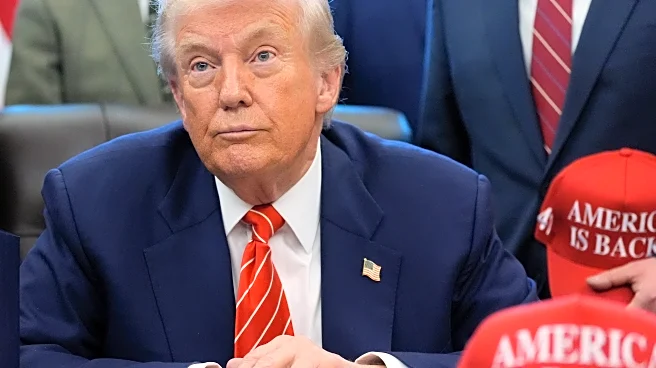
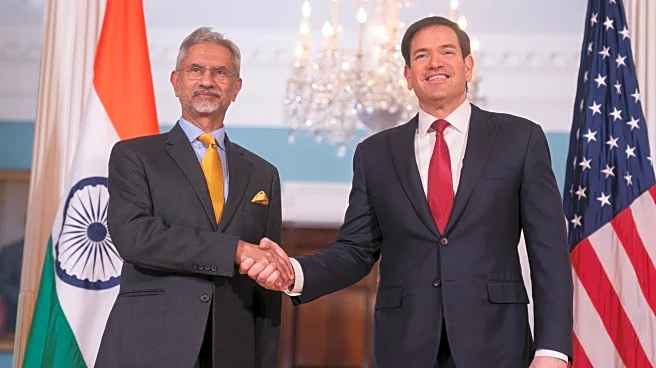
Christopher Anderson, which have generated significant attention online. These portraits include extreme close-ups of figures such as Susie Wiles, JD Vance, Marco Rubio, and Karoline Leavitt, capturing their faces in minute detail. The images have sparked discussions across social media and in political circles, with some defending the unretouched nature of the photos while others criticize them for being too revealing. Anderson, known for his close-up style, aims to present a more authentic image of political figures, challenging the often stage-managed portrayals typically seen in media.
Why It's Important?
The publication of these unretouched portraits highlights the ongoing debate about authenticity and image management in politics. In an era where public figures are often presented through carefully curated images, Anderson's work challenges the norm by offering a raw and unfiltered look at political figures. This approach raises questions about the expectations of public image and the role of media in shaping perceptions. The reactions to these photos underscore the divide in how different audiences perceive authenticity and the impact of visual media on political discourse. For political figures, the portrayal in such a raw manner can influence public perception and potentially affect their political capital.
What's Next?
As the conversation around these portraits continues, it may prompt further discussions about the ethics of photo retouching and the portrayal of public figures in media. Political figures and their teams might reconsider their approach to media engagements, balancing the desire for control over their image with the public's demand for authenticity. Media outlets may also reflect on their editorial choices regarding the presentation of political figures, potentially leading to a shift in how political photography is approached in the future.
Beyond the Headlines
The controversy surrounding these portraits also touches on broader cultural issues, such as the societal pressures on appearance and the influence of digital manipulation in media. In a world where image editing is commonplace, the decision to present unretouched photos challenges the norms and expectations of visual media. This could lead to a broader conversation about the impact of digital manipulation on self-image and public perception, encouraging a more critical view of the images consumed daily.