







What's Happening?
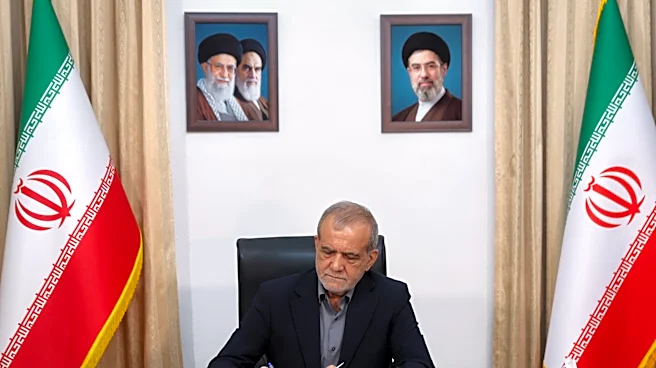
The planned peace talks between the United States and Iran have been unexpectedly cancelled, raising concerns about the stability of a recent ceasefire agreement. The talks were to focus on Iran's nuclear program and build on a memorandum of understanding
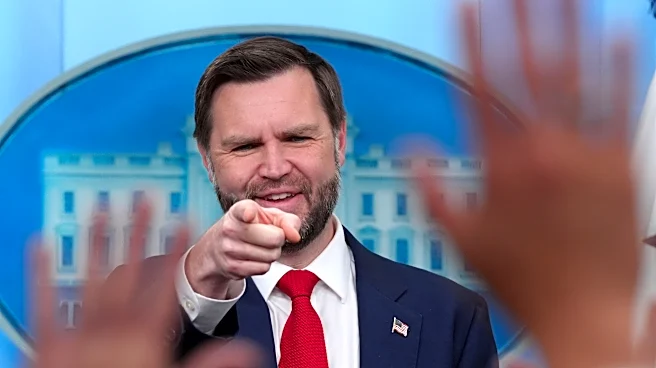
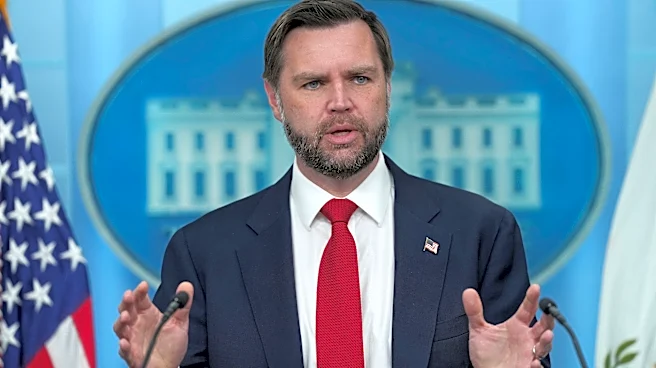
aimed at ending the conflict and reopening the Strait of Hormuz. The cancellation follows U.S. Vice President JD Vance's withdrawal from the meeting, with Iran seeking clearer evidence of U.S. compliance with the agreement. This development has contributed to a decline in oil prices, as traders anticipate the reopening of the strait will restore global crude supplies.
Why It's Important?
The postponement of U.S.-Iran talks highlights ongoing geopolitical tensions that could impact global energy markets and economic stability. The Strait of Hormuz is a vital passage for oil shipments, and any disruption can lead to increased energy costs and inflationary pressures. The uncertainty surrounding the talks adds to market volatility, affecting investor confidence and economic forecasts. The situation underscores the importance of diplomatic efforts to resolve conflicts and ensure stable energy supplies. Stakeholders in the energy sector and global markets must remain vigilant to navigate potential risks and opportunities.
What's Next?
The future of U.S.-Iran relations remains uncertain, with potential implications for global energy markets and geopolitical stability. Diplomatic efforts may resume to address unresolved issues and prevent further escalation. Energy companies and governments will need to assess their strategies to mitigate risks associated with geopolitical instability. Monitoring developments closely will be crucial for market participants to make informed decisions. The potential for renewed talks or further conflict will significantly influence market dynamics and global economic conditions.