




What's Happening?
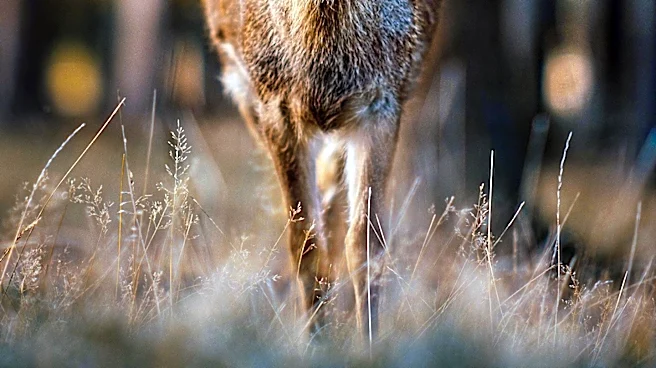
The Delaware Department of Natural Resources and Environmental Control (DNREC) has implemented emergency regulations for deer hunting to curb the spread of Chronic Wasting Disease (CWD). These new rules aim to manage the deer population and monitor the prevalence
of CWD within the state. Hunters will be able to submit their harvested deer for testing at various self-serve drop-off locations across Delaware. Further details regarding these testing sites and the specific regulations will be made available on the DNREC website before the upcoming hunting season commences. Additionally, the Division of Fish and Wildlife plans to issue an addendum to the 2026 Delaware Hunting and Trapping Guide, which will provide comprehensive information about CWD and the new emergency measures. This proactive approach by DNREC underscores the seriousness with which the state is addressing the potential threat of CWD to its deer population and ecosystem.
Why It's Important?
The adoption of emergency deer hunting regulations in Delaware is a significant step in protecting the state's wildlife and natural resources. CWD is a fatal neurological disease affecting deer, elk, and moose, and its spread can have devastating long-term consequences for cervid populations. Uncontrolled, CWD can lead to significant declines in deer numbers, impacting ecological balance and hunting traditions. For the U.S. hunting industry, the presence and spread of CWD can result in reduced hunting opportunities, stricter regulations, and decreased participation, which in turn affects local economies reliant on hunting tourism and related businesses. Furthermore, the disease poses a challenge to wildlife management agencies, requiring substantial resources for monitoring, testing, and implementing control measures. The health of the deer population is also crucial for ecosystem stability, as deer play a role in vegetation management and serve as a food source for other wildlife. Therefore, these regulations are vital for safeguarding both the ecological integrity and economic interests tied to Delaware's deer population.
What's Next?
Hunters in Delaware should anticipate reviewing the updated information on the DNREC website and the addendum to the 2026 Delaware Hunting and Trapping Guide for full details on the emergency CWD regulations and testing procedures. The success of these measures will largely depend on hunter cooperation in utilizing the self-serve drop-off locations for deer testing. DNREC will likely monitor the testing results closely to assess the prevalence and geographic spread of CWD, which will inform future policy decisions. Depending on the findings, the emergency regulations could be extended, modified, or made permanent. There may also be public awareness campaigns launched to educate hunters and the general public about CWD, its risks, and the importance of compliance with the new rules. Continued collaboration between wildlife agencies, hunters, and the public will be crucial in managing this disease effectively and protecting Delaware's deer population.
Beyond the Headlines
The implementation of CWD regulations in Delaware highlights a broader national challenge in wildlife management concerning emerging infectious diseases. CWD, often referred to as 'zombie deer disease,' raises complex questions about human interaction with wildlife, the ethics of disease control, and the long-term health of ecosystems. While there is currently no evidence of CWD transmission to humans, the potential for zoonotic spillover remains a concern, prompting ongoing research and vigilance. The economic implications extend beyond hunting, affecting industries such as venison processing and taxidermy. Moreover, the need for such regulations underscores the interconnectedness of environmental health and public policy, as decisions made regarding wildlife can have ripple effects on local communities and the broader natural environment. The situation in Delaware serves as a microcosm of the larger effort across the U.S. to adapt to and mitigate the impacts of wildlife diseases in a changing world.