






What's Happening?
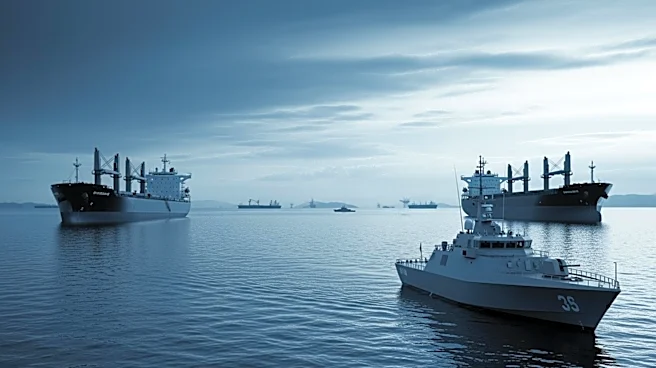
Iran has announced that it is receiving payments for allowing ships to pass through the Strait of Hormuz, a critical maritime chokepoint. According to Iranian officials, the first revenues from these tolls have been deposited in the country's central
bank, although details on the payers and amounts remain undisclosed. The tolls, reportedly ranging from $1 million to $2 million per vessel, are said to vary based on cargo type and risk level. This development follows months of speculation about Iran's intentions to charge for passage through the strait, a move that could significantly impact global oil prices.
Why It's Important?
The imposition of tolls by Iran on ships passing through the Strait of Hormuz could have far-reaching implications for global oil markets. The strait is a vital route for oil shipments, and additional costs could lead to increased oil prices worldwide. This situation is further complicated by international sanctions, particularly from the US and UK, which restrict payments to Iran's Islamic Revolutionary Guard Corps. The US has responded by ordering its Navy to target vessels that comply with Iran's toll demands, escalating tensions in the region.
What's Next?
The international community is likely to closely monitor the situation as it develops, with potential diplomatic and economic repercussions. The US and its allies may increase pressure on Iran through sanctions or military presence in the region. Meanwhile, oil producers and shipping companies will need to navigate the financial and logistical challenges posed by the tolls, potentially seeking alternative routes or negotiating terms with Iran.