






What's Happening?
Dennis Baffour-Awuah, a doctoral researcher from the Lamm Lab, participated in the joint VitisGen3 and Vitis x Muscadinia (VxM) Annual Meeting held from October 28-30, 2026, in Canandaigua, New York. This annual gathering convenes researchers, project
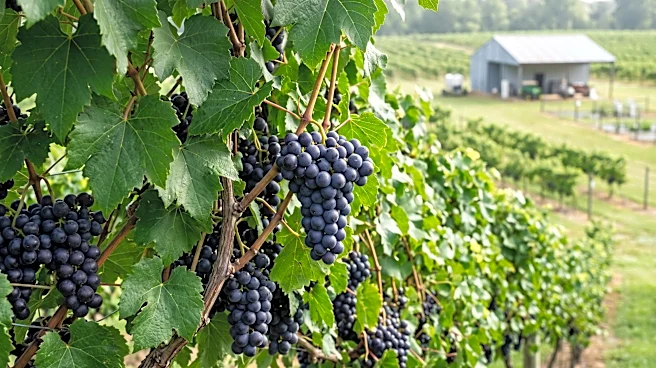
leaders, students, and industry stakeholders to share advancements, discuss challenges, and foster collaboration. The VxM project, titled 'Through the Grapevine: Developing Vitis x Muscadinia Wide Hybrids for Enhanced Disease Resistance and Quality,' is a multidisciplinary initiative funded by the USDA NIFA Specialty Crop Research Initiative (SCRI). The meeting featured presentations from research teams specializing in grape breeding, genetics, pathology, production, fruit quality, and marketing. Attendees also engaged in poster sessions, advisory board discussions, and project planning to assess progress and establish priorities for future work.
Why It's Important?
The Vitis x Muscadinia project and its annual meeting are crucial for the U.S. agricultural sector, particularly for grape growers and the wine industry. Developing new grape varieties with enhanced disease resistance can significantly reduce the need for chemical pesticides, leading to more sustainable farming practices and potentially lower production costs. Improved fruit quality also benefits consumers and strengthens the competitiveness of American grape products in global markets. The multidisciplinary nature of the project, encompassing genetics, pathology, and marketing, ensures that new varieties are not only resilient but also commercially viable and appealing to consumers. This collaborative effort, supported by USDA funding, addresses critical challenges faced by grape growers and contributes to the long-term economic health and environmental sustainability of the specialty crop industry.
What's Next?
Following the annual meeting, the VxM project will continue its research and development efforts, guided by the priorities established during the planning activities. The insights gained from focus groups with grape and berry growers regarding naming, branding, production challenges, and market opportunities will be integrated into the development and introduction of new grape varieties. The research aims to ensure that these new varieties meet both grower needs and consumer expectations. Future work will likely involve further genetic analysis, field trials to evaluate disease resistance and fruit quality in diverse environments, and continued engagement with industry stakeholders to facilitate the adoption of successful new hybrids. The ultimate goal is to bring these improved grape varieties to market, providing tangible benefits to growers and consumers alike.