







What's Happening?
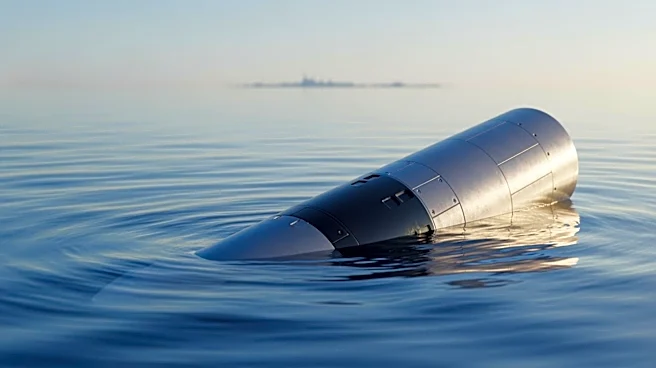
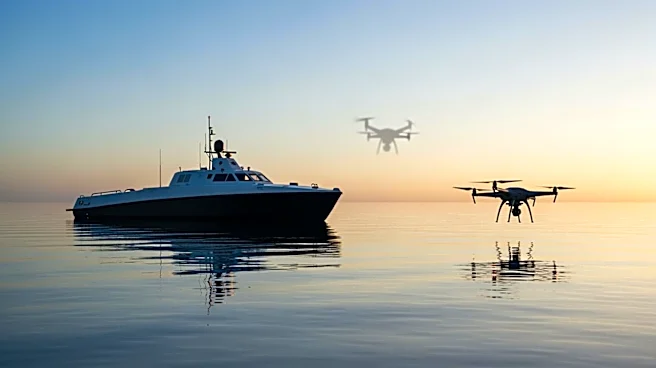
Exail's DriX H-9 unmanned surface vehicle (USV) has been chosen by an unspecified defense research organization for research into counter-unmanned aircraft systems (C-UAS) operations. Announced on April 16, 2026, the DriX H-9 will be equipped with advanced
sensor technologies designed to detect, track, and mitigate aerial threats. This system adapts proven C-UAS technology initially developed for land platforms to the maritime domain. The H-9 variant is a long-range version of the DriX USV, featuring a displacement of 2.1 tonnes, a length of 9 meters, an endurance of up to 20 days, and a range of 2,000 nautical miles. This development follows several recent defense acquisitions of the DriX USV, including orders from the innovation branch of a leading navy and France's Naval Hydrographic and Oceanographic Service (SHOM).
Why It's Important?
The selection of Exail's DriX H-9 USV for C-UAS research underscores the growing importance of maritime security and the need for advanced technologies to counter aerial threats. As unmanned aircraft systems become more prevalent, the ability to effectively detect and neutralize these threats is crucial for national defense and security. The adaptation of land-based C-UAS technology to maritime environments represents a significant advancement in defense capabilities, potentially enhancing the security of naval operations and protecting critical maritime infrastructure. This development may also influence future defense contracts and collaborations, as nations seek to bolster their maritime defense systems.
What's Next?
The integration of advanced sensor technologies into the DriX H-9 USV is expected to lead to further innovations in maritime defense systems. As research progresses, there may be opportunities for additional collaborations between Exail and defense organizations worldwide. The successful implementation of C-UAS technology in maritime environments could pave the way for broader adoption of unmanned systems in naval operations, potentially influencing defense strategies and procurement decisions. Stakeholders, including defense contractors and military organizations, will likely monitor the outcomes of this research closely to assess its impact on future defense capabilities.
Beyond the Headlines
The adaptation of C-UAS technology for maritime use highlights the evolving nature of defense strategies in response to emerging threats. This shift reflects a broader trend towards integrating unmanned systems across various domains, including land, air, and sea. The development of such technologies raises ethical and legal considerations, particularly regarding the use of autonomous systems in defense operations. As these technologies advance, there will be ongoing discussions about the balance between security and ethical use, as well as the implications for international maritime law and regulations.