







What's Happening?
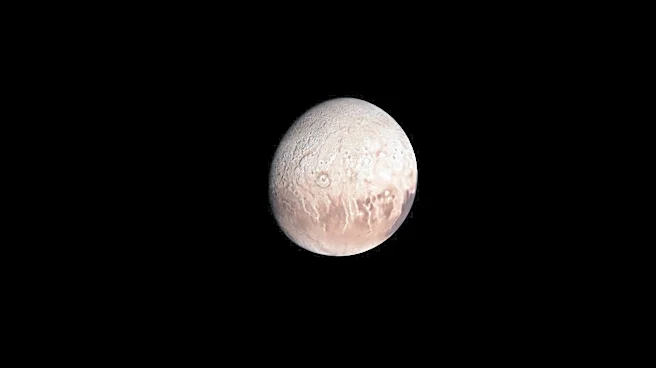
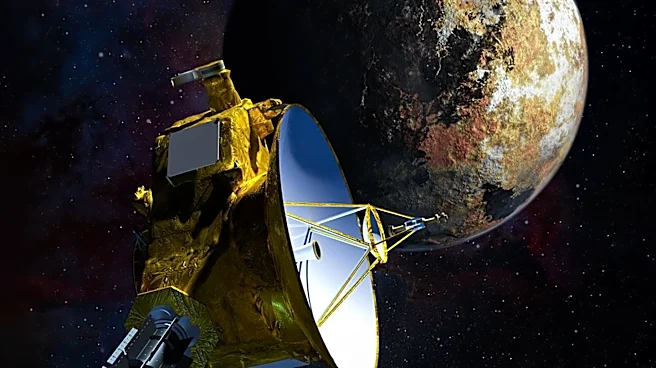
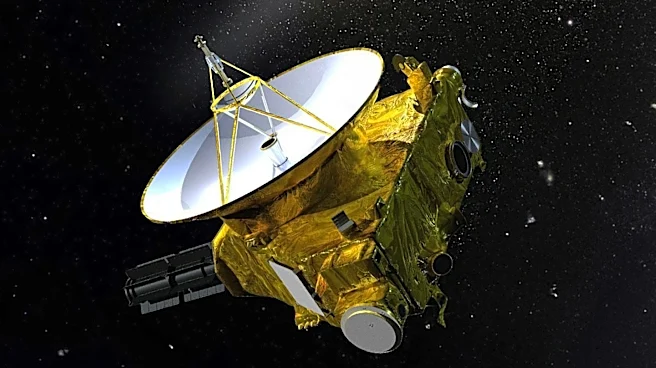
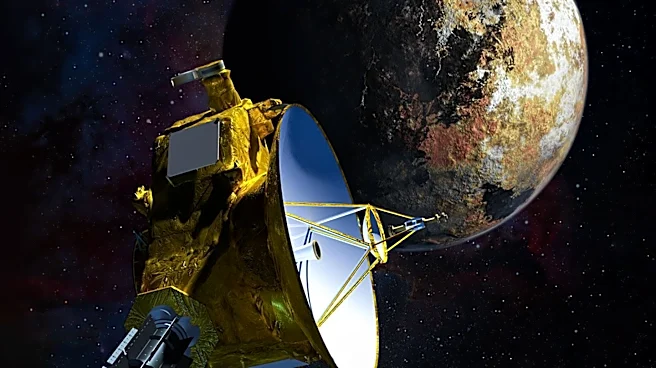
NASA's New Horizons probe has emerged from a nearly year-long hibernation, positioned almost 6 billion miles away from Earth, beyond Pluto. The spacecraft, which entered hibernation last August, is now in 'good health' and ready to resume its mission.
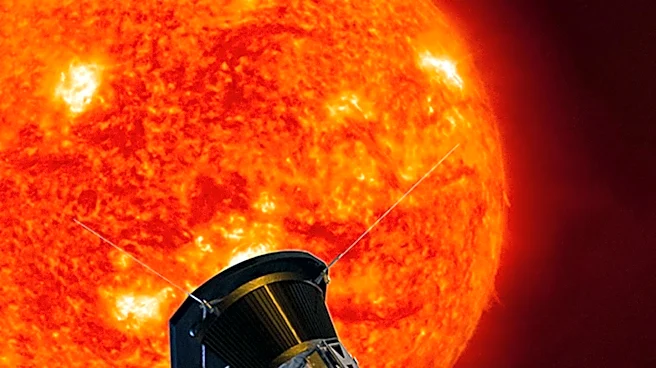
During its hibernation, New Horizons continued to collect data passively while most of its systems were powered down. The probe is currently transmitting the data it gathered over the past 321 days back to Earth, a process that takes about nine hours due to the vast distance. New Horizons, known for its historic flyby of Pluto in 2015 and the distant object Arrokoth in 2019, is now set to study hydrogen in the outer heliosphere. This region is influenced by the solar wind, a stream of charged particles from the sun. The data collected by New Horizons is expected to provide new insights into the boundary between the sun's influence and interstellar space, known as the 'termination shock.'
Why It's Important?
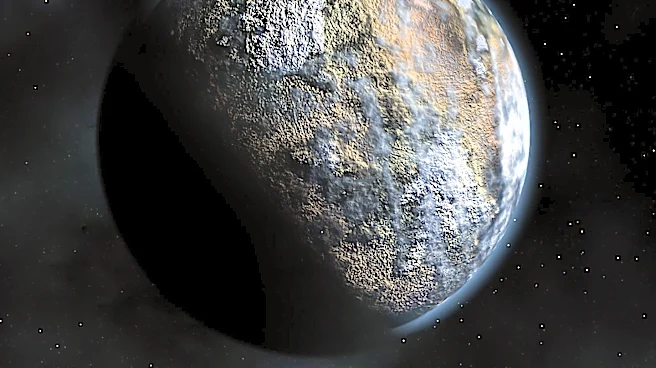
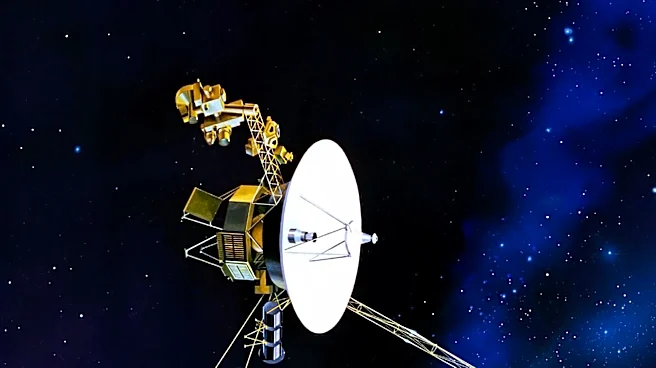
The New Horizons mission is significant as it continues to expand our understanding of the outer solar system and the Kuiper Belt, a region filled with icy bodies beyond Neptune. The probe's ability to study the outer heliosphere offers a unique opportunity to gather data on the solar wind's interaction with interstellar space, a frontier previously crossed only by NASA's Voyager probes. However, New Horizons is equipped with more advanced instruments, allowing for more sensitive measurements. This research could lead to breakthroughs in our understanding of the solar system's boundary and the transition to interstellar space, potentially impacting theories about solar and cosmic phenomena. The mission underscores NASA's commitment to exploring the farthest reaches of our solar system, contributing to scientific knowledge that could influence future space exploration and technology.
What's Next?
In the coming weeks, New Horizons will begin its study of hydrogen in the outer heliosphere. This research is expected to provide critical data on the solar wind and its effects at the edge of the solar system. The findings could have implications for understanding space weather and its impact on Earth and future space missions. As New Horizons continues its journey, it will remain a vital source of information about the outer solar system, potentially identifying new targets for exploration. The mission's progress will be closely monitored by scientists eager to unlock the mysteries of the solar system's outermost regions.