
What's Happening?
A new study from Rutgers University, published in JAMA Pediatrics, suggests that prenatal exposure to wildfire smoke may elevate a child's risk of developing autism. The research, led by Stefania Papatheodorou,
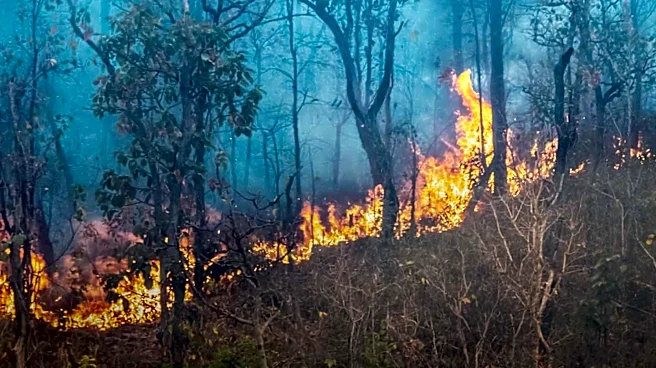
an OB-GYN and epidemiologist at the Rutgers School of Public Health, found a correlation between higher prenatal exposure to fine particulate matter (PM 2.5) from wildfire smoke and a subsequent autism diagnosis. The risk was particularly pronounced during the second and third trimesters of pregnancy. These tiny PM 2.5 particles, 30 times smaller than a human hair, are easily inhaled and can penetrate deep into the lungs and bloodstream. While the study highlights a potential link, it builds upon existing knowledge that wildfire smoke is harmful, causing respiratory and cardiovascular problems, especially in vulnerable populations. The findings underscore the need for pregnant individuals to take protective measures, such as limiting outdoor time during poor air quality days and using home air purification systems, even when smoke is not visibly present.
Why It's Important?
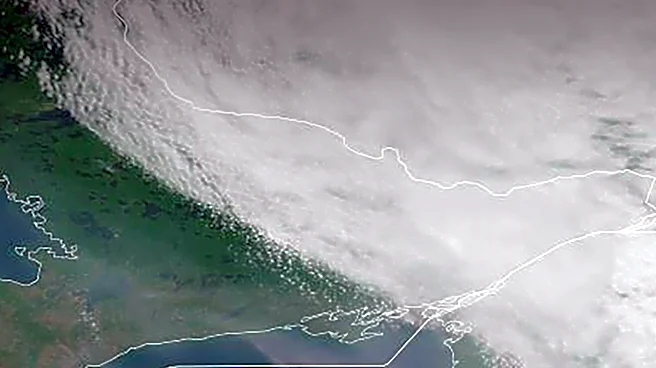
This study is important because it identifies a previously less understood health risk associated with wildfire smoke, specifically its potential impact on neurodevelopment during pregnancy. With climate change projected to increase the frequency and intensity of wildfires, particularly in regions further north, the population's exposure to wildfire smoke is expected to rise. This could lead to a greater disease burden, including an increase in autism diagnoses. The findings have significant implications for public health, prompting a need for increased awareness among healthcare providers and the general public about the environmental hazards of wildfires. It also emphasizes the far-reaching effects of wildfire smoke, which can travel long distances and impact communities far from the fire's origin, as seen with the 2023 Canadian wildfires affecting the Philadelphia region and causing a spike in asthma-related emergency room visits in New Jersey.
What's Next?
The Rutgers study's findings will likely prompt further research into the mechanisms by which wildfire smoke impacts fetal neurodevelopment and the specific components of smoke that contribute to autism risk. Public health campaigns may be developed to educate pregnant individuals and healthcare providers about the risks of wildfire smoke exposure and recommended protective measures. This could include more widespread use of air quality alerts and guidance on indoor air quality management. Policymakers may also face increased pressure to address climate change and implement more effective wildfire prevention and management strategies to mitigate the health impacts on communities, especially vulnerable populations. The study's emphasis on the long-distance travel of smoke suggests that regional and national strategies will be necessary to protect populations from these environmental hazards.
Beyond the Headlines
Beyond the immediate health implications, this study highlights the complex and interconnected nature of environmental health, climate change, and public policy. The potential link between wildfire smoke and autism risk adds another layer of urgency to climate action and forest management efforts. It also raises ethical considerations regarding environmental justice, as vulnerable communities may disproportionately bear the brunt of wildfire impacts due to socioeconomic factors or proximity to fire-prone areas. The study's findings could also influence urban planning and building codes, encouraging the development of more resilient communities that can better withstand the effects of wildfire smoke. Furthermore, it underscores the importance of interdisciplinary research, combining environmental science, public health, and neurodevelopmental studies, to address emerging health challenges in a changing climate.