
What's Happening?
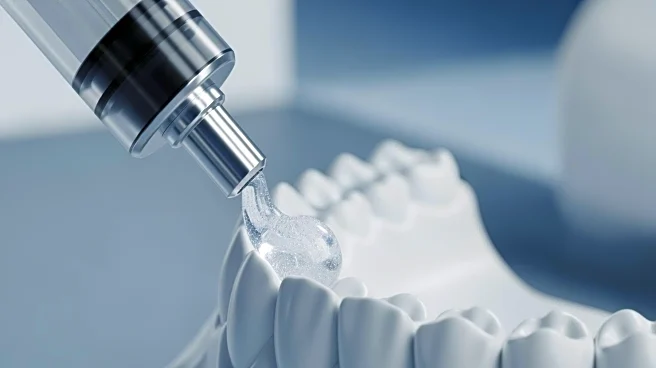
A recent study has introduced a novel nano antibiotic paste designed to improve lesion sterilization and tissue repair in pediatric dentistry. The paste, which incorporates tetracycline and chloramphenicol,
is enhanced with zinc oxide and silver nanoparticles (SNPs) to boost its efficacy. This development aims to address the limitations of existing CTZ pastes, which are used in the Lesion Sterilization and Tissue Repair (LSTR) technique. The study highlights the paste's ability to reduce reinfections and root resorptions, common issues in dental treatments. The researchers meticulously weighed the components to ensure a consistent concentration, which is crucial for determining the minimum inhibitory and bactericidal concentrations. The study also tested the paste against several bacterial strains, including E. faecalis, known for its resistance to antibiotics and its role in dental infections.
Why It's Important?
The introduction of this nano antibiotic paste could significantly impact pediatric dentistry by providing a more effective treatment option for dental infections. The enhanced paste addresses the shortcomings of current products, such as inconsistent concentrations and limited efficacy against resistant bacteria. By improving the sterilization process and reducing the risk of reinfections, this development could lead to better patient outcomes and reduced treatment failures. The use of SNPs and zinc oxide not only enhances the paste's antimicrobial properties but also offers a more controlled and uniform application, which is crucial for maintaining oral health in children. This advancement could set a new standard in dental care, potentially influencing future research and product development in the field.
What's Next?
The study's findings pave the way for further research, particularly in clinical settings, to validate the efficacy of the nano antibiotic paste in real-world applications. Researchers are currently applying the same methodology to wild strains of E. faecalis collected from necrotic canals of primary teeth to compare results with the ATCC strains used in the study. If successful, this could lead to the commercial production of the paste, offering a new tool for dentists in managing pediatric dental infections. Additionally, the study's approach to standardizing the concentration of components could influence the manufacturing processes of other dental products, ensuring more reliable and effective treatments.