


What's Happening?
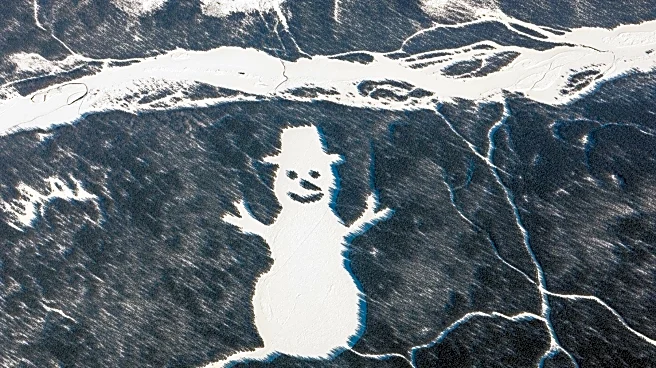
A satellite image released by NASA has captured a unique natural formation in the Russian Arctic, resembling a towering snowman. The image, taken by the Operational Land Imager aboard the Landsat 8 satellite on June 16, 2025, shows a series of elongated,
oval lagoons stretching over 14 miles near the village of Billings and Cape Billings on Russia’s Chukchi Peninsula. This formation, although appearing sculpted, is a result of natural geological processes involving ice, wind, and water. The phenomenon is attributed to 'thermokarst' activity, where buried ice wedges melt, causing the overlying soil to collapse and form shallow depressions that fill with meltwater. Over time, wind and wave movements elongate and align these lakes into the oval shapes visible in the satellite image. The thin ridges separating the lagoon segments may indicate the boundaries between underground ice wedges.
Why It's Important?
This discovery highlights the dynamic and changing nature of Arctic landscapes, which are significant in understanding climate change impacts. The formation of such unique geological features provides insights into the processes shaping the Arctic environment. As the Arctic continues to warm, studying these formations can help scientists predict future changes in the region's geography and ecology. The ability to capture and analyze these formations from space underscores the importance of satellite technology in monitoring remote and inaccessible areas. This information is crucial for researchers studying the effects of climate change on permafrost and the resulting implications for global sea levels and ecosystems.
What's Next?
Researchers may plan expeditions to the region during winter when frozen rivers and lakes provide stable surfaces for exploration. These expeditions could offer more detailed insights into the formation processes and the current state of the Arctic environment. Continued monitoring through satellite imagery will be essential to track changes in these formations over time. The data collected could inform climate models and contribute to global discussions on climate change mitigation strategies.
Beyond the Headlines
The formation of the snowman-like structure in Siberia also raises questions about the cultural and symbolic interpretations of natural phenomena. Such formations can become icons of winter and may influence local folklore and tourism. Additionally, the study of these formations can contribute to a broader understanding of Earth's geological history and the natural processes that have shaped its surface over millennia.