





What's Happening?
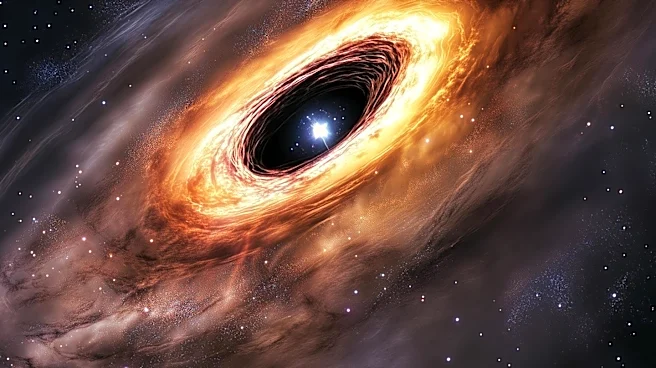
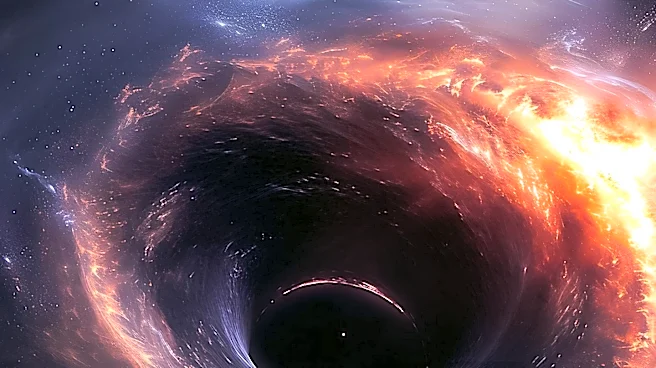
A supermassive black hole, named RBH-1, has been observed moving through space at nearly 1,000 kilometers per second, leaving a trail of newborn stars. This discovery, made by Pieter van Dokkum of Yale University and colleagues, marks the first confirmed
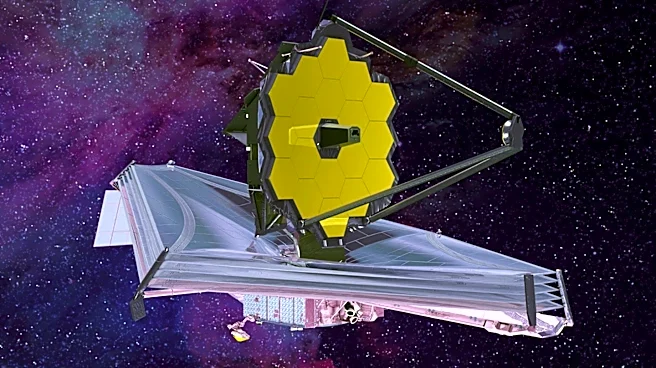
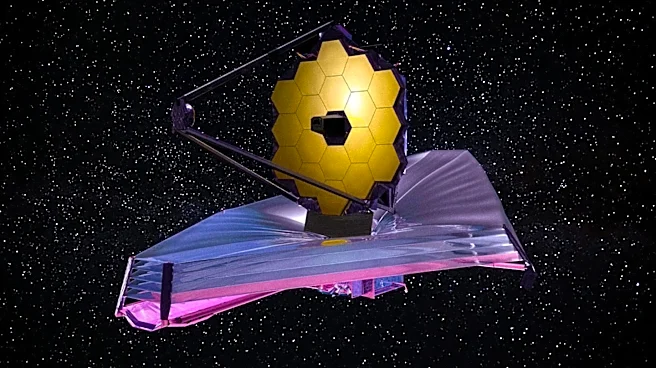
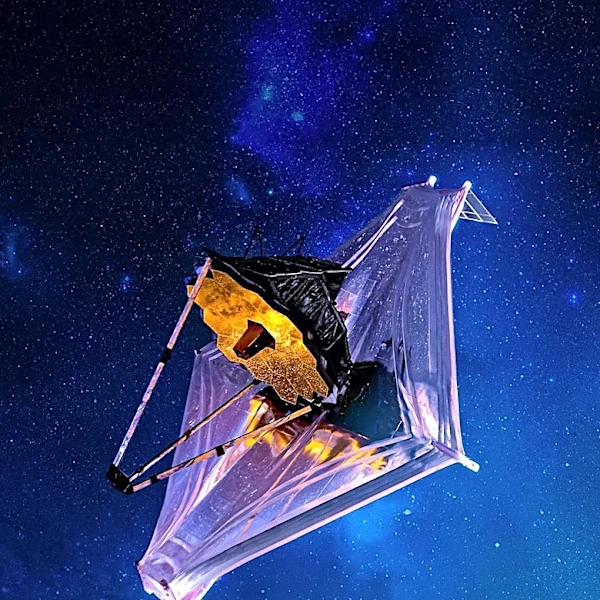
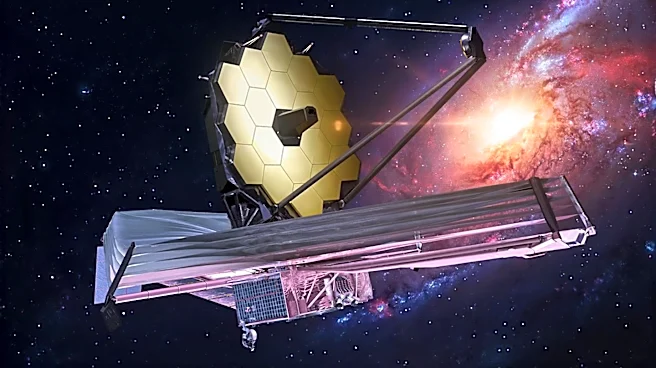
case of a runaway supermassive black hole. The black hole, weighing at least ten million solar masses, was detected using the James Webb Space Telescope, which identified a kinematic signature indicating a sudden change in gas velocity. This phenomenon supports the theory that black holes can be ejected from galaxies, a prediction made by astronomers over half a century ago.
Why It's Important?
The discovery of RBH-1 provides concrete evidence of runaway supermassive black holes, a concept that has been theorized but not previously confirmed. This finding has significant implications for our understanding of galaxy dynamics and the behavior of black holes. It suggests that such ejections may be more common than previously thought, potentially affecting the evolution of galaxies and the distribution of matter in the universe. The study of RBH-1 and similar phenomena could lead to new insights into the mechanisms that drive black hole ejections and their impact on cosmic structures.
What's Next?
Further research is needed to understand the mechanisms behind the ejection of RBH-1 and similar black holes. Astronomers will likely continue to search for additional runaway black holes using advanced telescopes like Euclid and the Nancy Grace Roman Space Telescope. These observations could help determine the frequency of such events and their role in shaping galaxies. Additionally, studying the trail of newborn stars left by RBH-1 may provide insights into star formation processes in extreme environments. As more data becomes available, researchers will refine models of black hole dynamics and their interactions with surrounding matter.