



What's Happening?
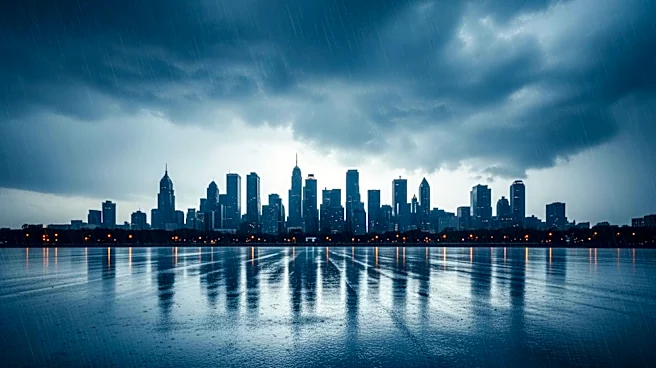
Chicago has set a new rainfall record, breaking a 77-year-old mark as severe storms continue to impact the Great Lakes region. According to the National Weather Service (NWS), the record was broken at Chicago O'Hare International Airport, where 2.43 inches
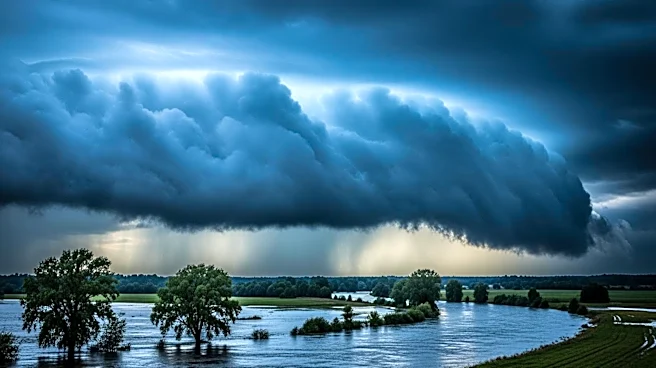
of rain fell, surpassing the previous record of 1.21 inches set in 1949. The heavy rainfall has led to widespread flooding concerns, with several rivers reaching major flood stages in Wisconsin and Michigan. Flood-related advisories and warnings are in effect from Iowa through Michigan, including Illinois. Meteorologists warn that the saturated ground makes the region vulnerable to further flooding, and even moderate rainfall could lead to water accumulation on streets and low-lying areas. Emergency managers are advising residents to stay informed about weather forecasts and be prepared for rapidly changing conditions.
Why It's Important?
The record-breaking rainfall in Chicago highlights the increasing frequency and intensity of severe weather events, which can have significant impacts on infrastructure and public safety. Flooding can disrupt transportation, damage property, and pose risks to human health. The situation underscores the need for improved drainage systems and emergency preparedness to mitigate the effects of such events. Additionally, the ongoing storms in the Great Lakes region could have broader implications for agriculture and water management, affecting local economies and communities. The heightened flood risk also raises concerns about climate change and its role in altering weather patterns, prompting discussions on environmental policy and resilience strategies.
What's Next?
As the storms continue, the National Weather Service has issued a hazardous weather outlook for the region, with the potential for strong to severe thunderstorms and locally heavy rainfall. Residents are advised to monitor official forecasts and take necessary precautions to protect themselves and their property. Emergency services may need to respond to flooding incidents, and local governments could implement measures to address drainage issues and improve infrastructure resilience. The situation may also prompt further analysis and policy discussions on climate adaptation and disaster preparedness.