





What's Happening?
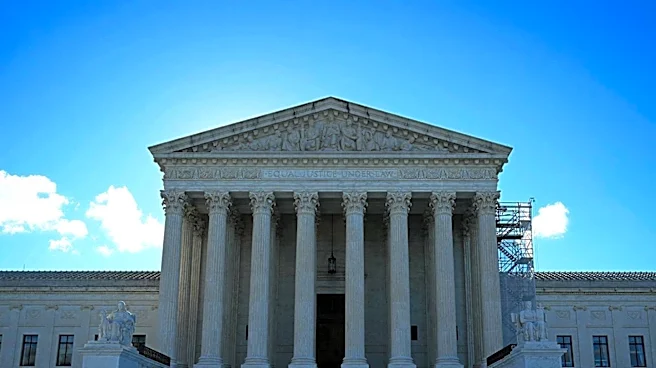
The recent term of the U.S. Supreme Court has been marked by decisions that reflect a countermajoritarian approach, reshaping American democracy and legal principles. Under Chief Justice John Roberts, the court has issued rulings that dismantle democratic
safeguards, favor wealthy interests, and challenge multiculturalism. Notable decisions include the narrowing of the Voting Rights Act in Louisiana v. Callais, the expansion of executive power over immigration in Mullin v. Doe, and the end of independent regulatory agencies in Trump v. Slaughter. These rulings have sparked concerns about the court's role in shaping policy and its impact on civil rights and democratic governance.
Why It's Important?
The Supreme Court's recent decisions underscore its significant influence on American law and society, often acting as a counterbalance to legislative and executive actions. The court's rulings have the potential to reshape key areas such as voting rights, immigration, and regulatory oversight, affecting millions of Americans. The trend towards a countermajoritarian approach raises questions about the court's alignment with public opinion and its role in upholding democratic principles. As the court continues to navigate contentious issues, its decisions will likely have lasting implications for the balance of power among the branches of government and the protection of individual rights.
What's Next?
The court's recent term may prompt calls for judicial reform and increased scrutiny of its decisions. Legal scholars and policymakers may explore options to address concerns about the court's influence, such as term limits for justices or changes to the court's structure. The court's future rulings will be closely watched for their impact on key issues and their alignment with broader societal values. As the nation approaches its 250th anniversary, the court's role in shaping the future of American democracy will remain a critical area of focus.