








What's Happening?
The Catholic Church in Spain is under scrutiny for its management of religious monuments, which are significant tourist attractions. According to a report by ObservaTur, the Sagrada Familia, the Mezquita de Córdoba, and the Cathedral of Seville are among
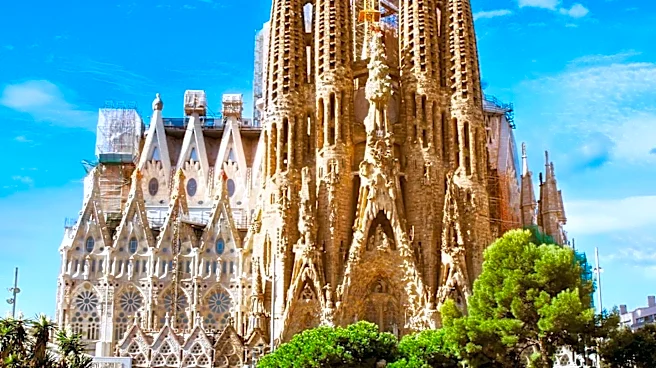
the most visited sites, drawing millions of visitors annually. The Church's management of these sites has raised questions about financial transparency and legal ownership. The Sagrada Familia, managed by a private canonical foundation, reported revenues of 134.5 million euros in 2025, primarily from visitor contributions. Meanwhile, the Mezquita de Córdoba and the Cathedral of Seville, which were registered as Church property in 2006 and 2010 respectively, have been labeled as controversial acquisitions by the Coordinadora Recuperando, which seeks to annul these registrations. The Church's financial practices, including the lack of VAT on entry fees and the opaque reporting of income, have been criticized by groups like Europa Laica.
Why It's Important?
The management of these religious sites has significant economic implications, as they are major tourist attractions contributing to local economies. The Church's financial practices, including the exemption from VAT and the lack of transparency in financial reporting, have sparked debate about the fairness and legality of these operations. This situation highlights broader issues of church-state relations in Spain, particularly regarding the financial privileges of religious institutions. The controversy also touches on cultural heritage management, as these sites are not only religious symbols but also part of Spain's national heritage. The outcome of this debate could influence future policies on the management and taxation of religious properties, potentially affecting the Church's financial operations and its role in cultural tourism.
What's Next?
The ongoing legal and public scrutiny may lead to changes in how religious sites are managed and taxed in Spain. The Coordinadora Recuperando's efforts to annul the property registrations of the Mezquita de Córdoba and the Cathedral of Seville could set a precedent for other contested properties. Additionally, increased pressure from civil society groups like Europa Laica may push for greater financial transparency and accountability from the Church. The Spanish government may also face calls to reassess the financial privileges granted to religious institutions, potentially leading to legislative changes. These developments could have long-term impacts on the Church's financial strategies and its relationship with the state.
Beyond the Headlines
The debate over the Church's management of religious sites in Spain raises deeper questions about the intersection of religion, culture, and economics. The Church's role as a custodian of cultural heritage is complicated by its financial interests and the legal ambiguities surrounding property ownership. This situation reflects broader global trends where religious institutions are increasingly involved in commercial activities, prompting discussions about their societal roles and responsibilities. The outcome of this debate could influence how religious and cultural heritage is preserved and utilized, balancing economic benefits with ethical considerations.