



What's Happening?
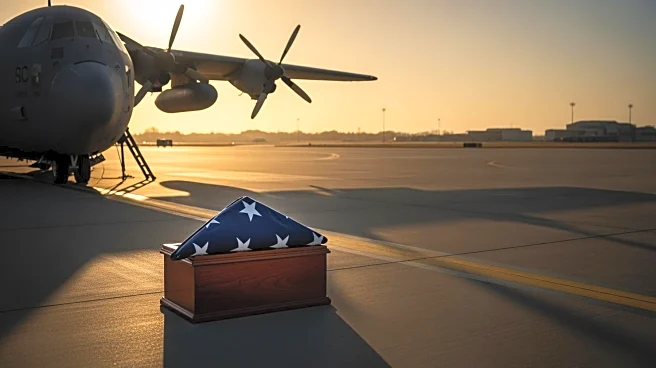
President Trump attended the dignified transfer of six U.S. service members who were killed in the ongoing conflict with Iran. This event comes as tensions escalate in the Middle East, with Israel targeting Iran's largest gas field and Iran retaliating
by striking Qatar's liquefied natural gas terminal. The situation has led to a surge in gas prices in the U.S., affecting the economy. Additionally, Trump's Department of Homeland Security nominee, Markwayne Mullin, faced intense questioning during his Senate confirmation hearing. Meanwhile, the FBI is investigating an apparent improvised explosive device found outside MacDill Air Force Base, and thousands of TSA agents have called out sick due to unpaid wages.
Why It's Important?
The conflict in Iran and the subsequent rise in gas prices have significant implications for the U.S. economy, potentially affecting consumer costs and inflation. The dignified transfer attended by President Trump highlights the human cost of international conflicts and may influence public opinion and policy decisions regarding military engagement. The scrutiny of Markwayne Mullin during his confirmation hearing reflects ongoing concerns about leadership in national security. The TSA agent sick-outs could impact airport operations and travel, emphasizing the need for resolution in federal employee compensation.
What's Next?
The U.S. government may need to address the economic impact of rising gas prices and consider diplomatic or military strategies to stabilize the situation in the Middle East. The Senate will continue to evaluate Mullin's qualifications for the DHS role, which could affect national security policies. The FBI's investigation into the explosive device at MacDill Air Force Base may lead to increased security measures at military installations. Resolving the TSA agent payment issue is crucial to maintaining airport security and operations.