
What's Happening?
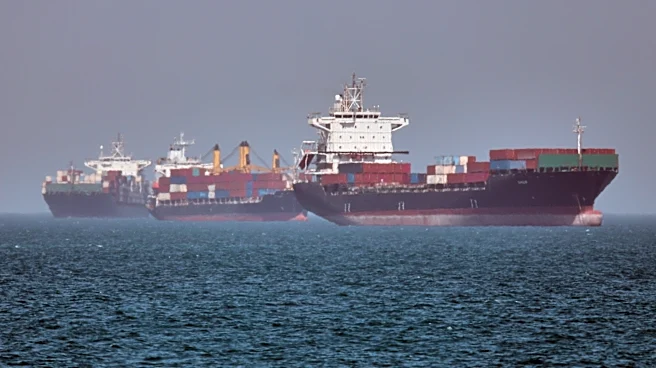
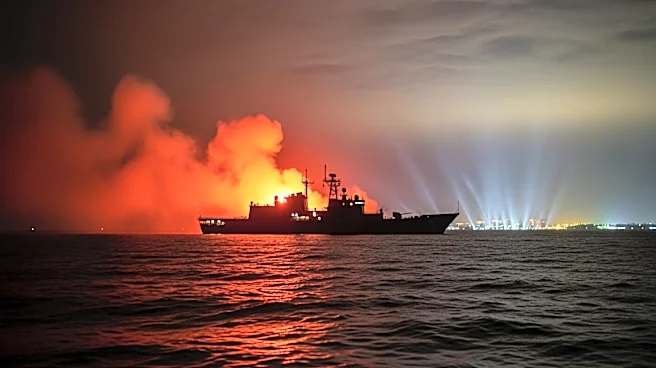
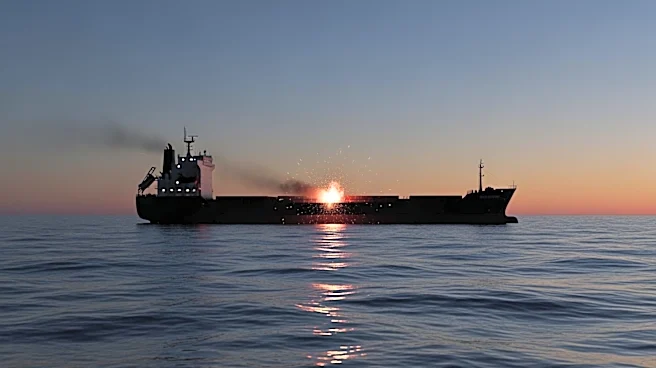
A cargo ship caught fire after being struck by an unknown projectile off the coast of Qatar, according to the British military. This incident marks the latest in a series of attacks on vessels in the Persian
Gulf, challenging the month-old ceasefire between the U.S. and Iran. The ceasefire, which halted direct hostilities, has been under strain due to Iran's restrictions on the Strait of Hormuz and the U.S. blockade of Iranian ports. The U.S. is awaiting Iran's response to a proposal aimed at ending the conflict, reopening the strait, and addressing Iran's nuclear program. The attack on the cargo ship, which occurred 23 nautical miles northeast of Doha, resulted in a small fire that was extinguished without casualties. No group has claimed responsibility for the attack.
Why It's Important?
The incident underscores the fragility of the ceasefire and the ongoing tensions in the Persian Gulf, a critical region for global oil supply. The Strait of Hormuz is a vital chokepoint for the world's energy flow, and disruptions there can have significant implications for global oil prices and economic stability. The U.S. and Iran's standoff over the strait and Iran's nuclear program remains a major geopolitical issue, with potential consequences for international relations and regional security. The situation also highlights the risks of escalation, as both nations have issued threats of military action in response to perceived provocations.
What's Next?
The U.S. and Iran are likely to continue negotiations to resolve the conflict, with the fate of Iran's enriched uranium stockpile being a key issue. The international community will be watching closely for any developments that could lead to a resolution or further escalation. The U.S. has threatened to resume bombing if Iran does not comply with demands to reopen the strait and curb its nuclear activities. Meanwhile, Iran has warned of retaliatory attacks on U.S. bases and ships if its vessels are targeted.