




What's Happening?
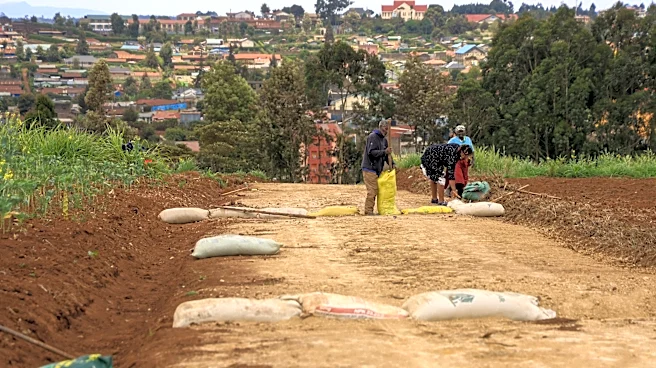
Farmers in Burkina Faso are actively testing integrated soil solutions through demonstration plots to address declining soil fertility and increasingly erratic rainfall. These plots, established in collaboration between Soil Values and the Agro-Input
Wholesalers and Retailers Association (AGRODIA), serve as practical learning spaces. Farmers are observing and comparing various combinations of improved seeds, organic amendments, mineral fertilizers, and diversified cropping systems, such as maize-cowpea and maize-groundnut intercropping. The initiative aims to show how these practices can collectively manage soil fertility, support crop productivity, and enhance the resilience of farming systems under challenging growing conditions. Guided visits to these plots allow farmers to draw inspiration and adapt techniques to their own fields.
Why It's Important?
The challenges of declining soil fertility and unpredictable rainfall pose significant threats to food security and agricultural livelihoods in Burkina Faso. A single technological solution is insufficient; instead, an integrated approach is crucial. By demonstrating how various components like improved seeds, organic matter, and appropriate fertilizers work together, this initiative empowers farmers with practical knowledge. This hands-on learning helps them make informed decisions to improve soil structure, water-holding capacity, and overall crop resilience. The involvement of local networks and stakeholders, including farmer organizations and technical services, ensures that these solutions are tailored to local conditions and can be widely adopted, fostering sustainable agricultural development.
What's Next?
The success of these demonstration plots is expected to lead to wider adoption of integrated soil fertility management (ISFM) practices beyond the initial sites. Soil Values and AGRODIA are working through local actors and existing agricultural networks to expand access to sustainable soil management knowledge. The collaboration aims to create pathways for farmers to access, adapt, and apply appropriate practices in their own fields. This includes continued engagement with farmers, agricultural input suppliers, and local authorities to ensure that knowledge and technologies are effectively disseminated. The long-term goal is to strengthen the resilience of farming systems across Burkina Faso, supported by the Netherlands Directorate-General for International Cooperation (DGIS) through the Soil Values program.
Beyond the Headlines
This initiative highlights a critical global challenge: adapting agriculture to climate change and environmental degradation, particularly in vulnerable regions. The integrated approach to soil management in Burkina Faso serves as a model for how local partnerships and practical demonstrations can drive sustainable change. It underscores the importance of moving beyond isolated interventions to holistic solutions that consider the complex interplay of soil health, crop varieties, and climate patterns. The program's emphasis on local adaptation and farmer-led learning also reflects a broader shift towards empowering communities to develop and implement their own solutions for agricultural resilience.