






What's Happening?
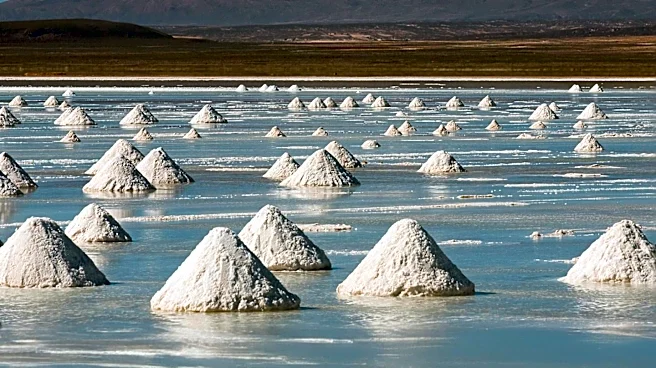
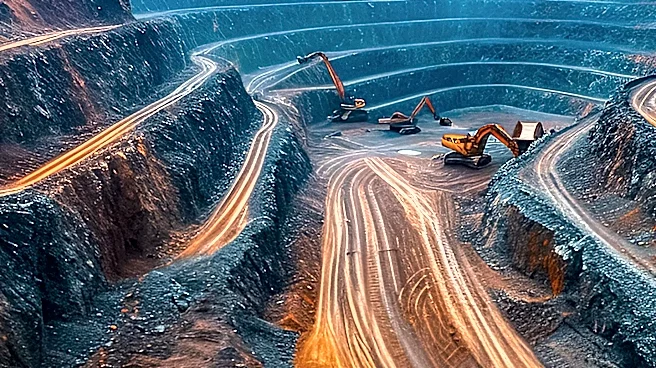
The Democratic Republic of Congo has initiated its first-ever lithium export, with shipments from the Manono project managed by Chinese mining giant Zijin Mining. This development marks a significant milestone for Congo, positioning it as a potential
key supplier in the global electric vehicle battery supply chain. The Manono project, which began production in May, has already started exporting crude lithium sulfate to China. The project has been fast-tracked, with initial shipments described as trial volumes. The ownership of the Manono project has been contentious, with Congo revoking the permit of Australian miner AVZ Minerals and reassigning it to Manono Lithium, a company now majority-owned by Zijin. This ownership structure reflects a common pattern in Chinese resource investments in Africa, combining foreign capital with state participation.
Why It's Important?
The export of lithium from Congo to China is significant as it enhances China's dominance in the critical minerals sector in Central Africa. With control over cobalt, copper, and now lithium, China holds a commanding position in the core inputs for lithium-ion battery production. This concentration of resources in Congo comes at a time when the region is experiencing security challenges, including armed clashes and attacks on foreign workers. The geopolitical implications are profound, as the U.S. and China vie for influence over Africa's critical minerals. The export underscores the strategic importance of Congo's resources in the global battery-mineral supply chain, potentially affecting international relations and economic strategies.
What's Next?
The Manono project is expected to produce 30,000 metric tons of lithium carbonate equivalents this year, with further development planned, including a smelter and downstream facilities by December. The legal disputes surrounding the project may impact future developments, as U.S.-backed KoBold Metals has indicated it will not proceed until these issues are resolved. The logistics of exporting lithium from the landlocked Manono involve complex supply chains, highlighting the need for regional infrastructure improvements. As Congo continues to navigate its resource management, the international community will likely monitor the situation closely, given the strategic importance of these minerals.
Beyond the Headlines
The export of lithium from Congo to China not only impacts the global battery supply chain but also raises questions about the ethical and legal dimensions of resource extraction in Africa. The involvement of foreign companies in Congo's mineral sector has historically been fraught with challenges, including disputes over ownership and concerns about environmental and social impacts. The concentration of mineral resources in a region with ongoing security issues also poses risks to workers and local communities. As the demand for battery minerals grows, the pressure on Congo's resources may lead to further geopolitical tensions and necessitate careful management to ensure sustainable and equitable development.