


What's Happening?
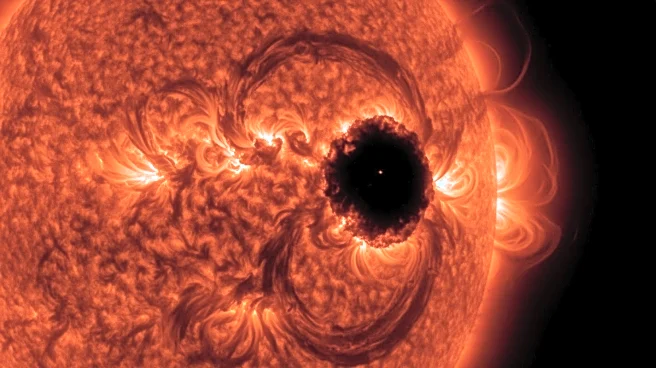
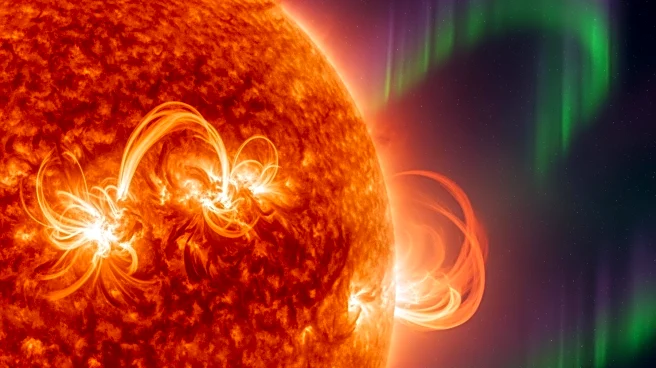
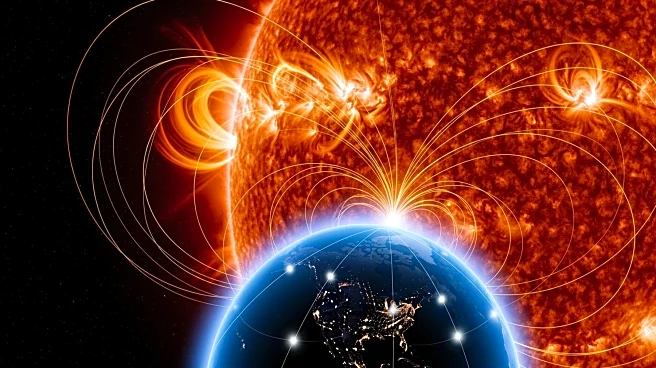
The NOAA Space Weather Prediction Center has reported that a G4 (Severe) geomagnetic storm level was reached on January 19, 2026, following the arrival of a coronal mass ejection (CME). The storm has caused minor degradation of high-frequency radio communications
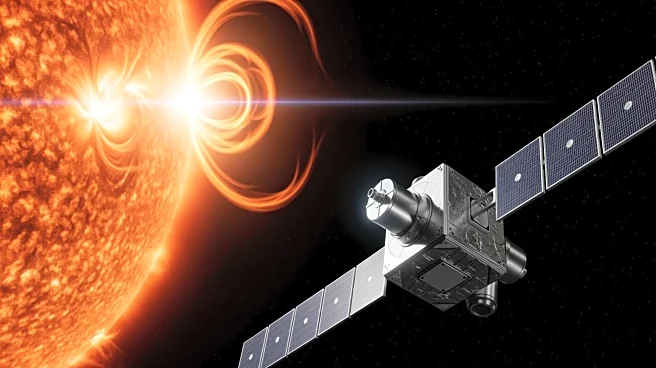
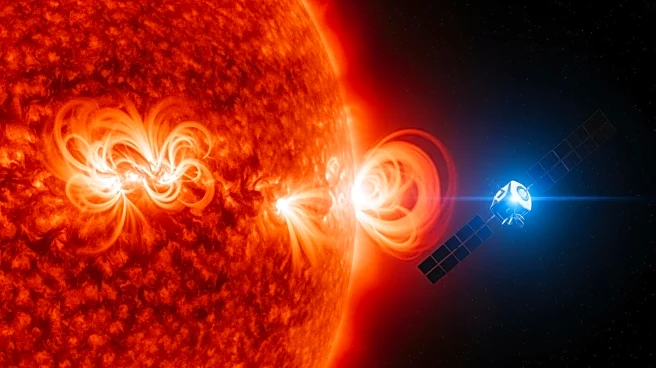
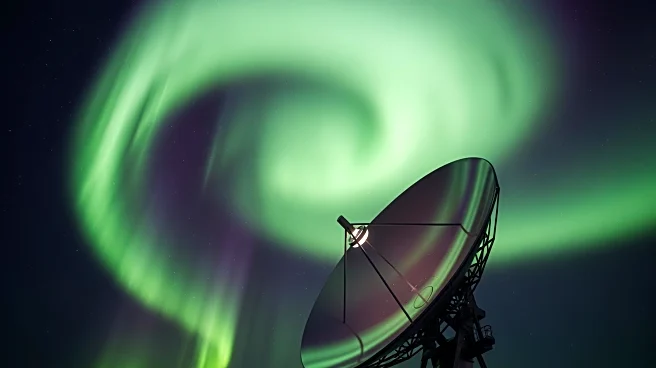
on the sunlit side of the Earth and brief disruptions in low-frequency navigation signals. The CME's passage is expected to continue, with severe storm levels persisting into the evening. Geomagnetic storms of this magnitude can affect satellite operations, power grids, and communication systems, highlighting the importance of monitoring space weather phenomena.
Why It's Important?
Geomagnetic storms can have significant impacts on modern technology and infrastructure. The current storm poses risks to satellite operations, potentially affecting GPS and communication systems. Power grids may also experience fluctuations, leading to potential outages. Understanding and predicting space weather events are crucial for mitigating these risks and ensuring the resilience of critical infrastructure. The storm underscores the need for continued investment in space weather research and monitoring to protect technological systems that are integral to daily life and economic activities.