
What's Happening?
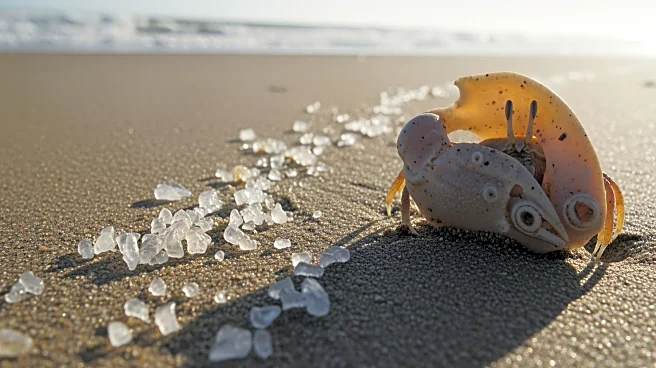
A recent study conducted by the University of Exeter, in collaboration with other institutions, has revealed that fiddler crabs in the Gulf of Urabá, Colombia, are ingesting and potentially breaking down
microplastic particles. The research, led by Professor José M. Riascos, involved sampling 95 crabs from a highly polluted mangrove forest. The findings suggest that these crabs can break down plastics within days. However, scientists caution that this process might release harmful nanoplastics into the crabs' tissues and the broader food chain. The study highlights the crabs' ability to adapt to high levels of plastic contamination, which is among the highest reported globally.
Why It's Important?
The study's findings are significant as they provide insights into how marine life is adapting to increasing plastic pollution. The ability of fiddler crabs to break down microplastics could have implications for understanding the fate of plastics in marine environments. However, the potential release of nanoplastics poses a new environmental threat, as these smaller particles could enter the food chain, affecting a wide range of species, including humans. This research underscores the urgent need for addressing plastic pollution and developing sustainable waste management practices to protect marine ecosystems and public health.
What's Next?
Further research is needed to understand the long-term effects of nanoplastics on marine life and ecosystems. Scientists may explore the potential for other species to break down plastics and the implications for environmental health. Additionally, the study could prompt policymakers and environmental organizations to intensify efforts to reduce plastic waste and promote recycling and sustainable packaging solutions. The findings may also lead to increased public awareness and advocacy for reducing plastic use and improving waste management practices globally.
Beyond the Headlines
The study raises ethical and ecological questions about human responsibility for plastic pollution and its impact on marine life. It highlights the resilience of certain species in adapting to human-induced environmental changes, but also the unintended consequences of such adaptations. The potential for nanoplastics to enter the food chain could have long-term health implications, necessitating a reevaluation of current environmental policies and practices. This research may also inspire innovations in bioremediation, using natural processes to mitigate pollution.