






What's Happening?
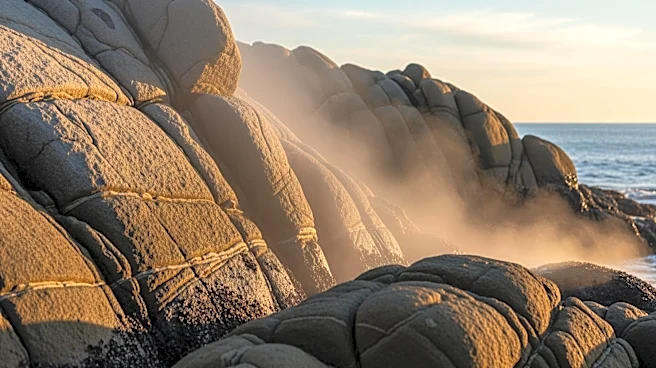
Recent geological activity along California's coast has sparked interest and confusion, as areas like the so-called 'Hope Ranch Volcano' have been mistakenly identified as volcanic sites. According to experts, these sites are not true volcanoes but rather
areas where spontaneous combustion occurs due to geological processes. James Boles, a professor emeritus with UC Santa Barbara's Earth Science Department, explains that the phenomenon is caused by the oxidation of unstable compounds in the rocks, such as iron sulfides, which generates significant heat. This heat can lead to the spontaneous combustion of organic materials, creating the appearance of volcanic activity. Similar occurrences have been reported along Ventura County's coast, where locals have dubbed a site the 'Rincon Volcano.' However, these are also cases of misidentification, as the geological processes involved do not indicate the presence of an actual volcano.
Why It's Important?
Understanding the true nature of these geological phenomena is crucial for accurate scientific communication and public safety. Misidentifying these sites as volcanoes can lead to unnecessary alarm and misallocation of resources. By clarifying that these are instances of spontaneous combustion rather than volcanic activity, authorities can better manage public perception and response. Additionally, this knowledge helps in the study of geological processes and the conditions that lead to such occurrences. It also highlights the importance of geological research in coastal areas, which can be prone to unique and potentially hazardous natural events.
What's Next?
Further research and monitoring of these sites are likely to continue, as scientists aim to better understand the conditions that lead to spontaneous combustion. This could involve detailed geological surveys and the development of predictive models to anticipate future occurrences. Public education campaigns may also be implemented to inform local communities about the true nature of these phenomena, reducing the likelihood of panic and ensuring appropriate safety measures are in place. Collaboration between geologists, local authorities, and emergency services will be essential in managing these sites effectively.
Beyond the Headlines
The misidentification of geological phenomena as volcanic activity raises broader questions about public understanding of natural sciences. It underscores the need for effective science communication and education to bridge the gap between scientific knowledge and public perception. This situation also highlights the potential for geological features to be misinterpreted, which can have implications for land use planning and environmental management. As climate change and human activities continue to impact geological processes, understanding these interactions will be increasingly important.