




What's Happening?
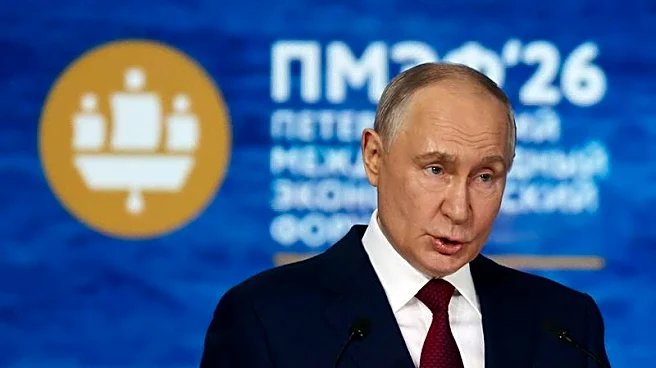
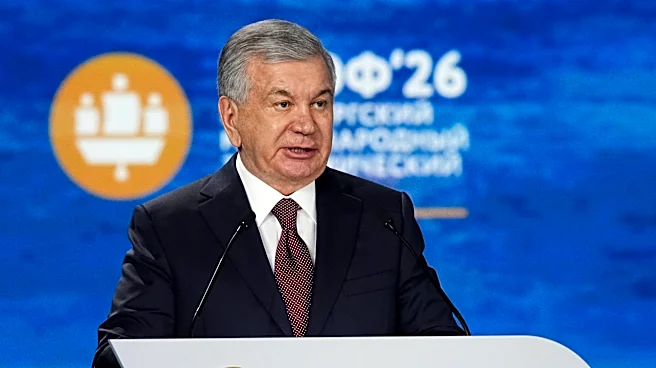
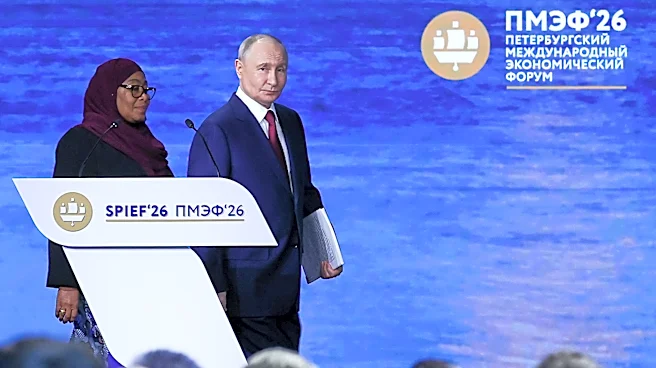
Rodney Mims Cook Jr, the chairman of the US Commission of Fine Arts, participated in a cultural exchange roundtable at the St Petersburg International Economic Forum, often referred to as 'Russian Davos'. This marks the first time in nearly a decade that
a US official has attended the event. The roundtable, titled 'Russia-USA: dialogue of cultures', was moderated by Mikhail Shvydkoy, Russia's international cultural envoy. Cook, known for his advocacy of classical architecture, discussed his support for Russian heritage projects and his personal connections with Russian culture. The event also featured other notable figures, including Russian culture minister Olga Lyubimova and conductor Valery Gergiev.
Why It's Important?
Cook's participation in the forum highlights ongoing cultural diplomacy efforts despite strained US-Russia relations following Russia's invasion of Ukraine. The presence of a US official at such an event could signal a potential thaw in cultural exchanges, even as political tensions remain high. This engagement may influence future cultural and diplomatic interactions between the two nations, potentially opening avenues for dialogue in other areas. However, it also raises questions about the implications of engaging with a nation currently under significant international sanctions.
What's Next?
The participation of US figures in the forum may prompt discussions within the US government regarding the appropriateness and potential benefits of such engagements. It remains to be seen whether this will lead to increased cultural exchanges or if it will face criticism from those opposed to engaging with Russia under current circumstances. The response from US political leaders and cultural institutions could shape future policies on international cultural diplomacy.
Beyond the Headlines
The event underscores the complex interplay between culture and politics, where cultural diplomacy can serve as a bridge even amidst geopolitical conflicts. It also highlights the role of cultural figures and institutions in shaping international perceptions and fostering dialogue. The involvement of the Russian Orthodox Church in promoting cultural diplomacy further illustrates the multifaceted nature of these exchanges, where religious and cultural narratives intersect with political agendas.